
A nurse is providing preoperative teaching about breathing exercises to a patient. Which of the following instructions should the nurse include? Select all that apply.
"Perform deep breathing every 2 hours around the clock."
"Make sure chest and shoulders move when breathing."
"Take a deep breath before each atempt to cough."
"Sit up straight before beginning coughing exercises."
Use a pillow to support the area when coughing
Correct Answer : A,C,D,E
Choice A reason: Performing deep breathing exercises every 2 hours helps prevent postoperative complications such as pneumonia and atelectasis.
Choice B reason: While chest movement is part of breathing, the instruction is incomplete and should emphasize diaphragmatic breathing rather than shoulder movement.
Choice C reason: Taking a deep breath before coughing helps to increase the effectiveness of the cough, which can clear secretions from the lungs.
Choice D reason: Sitting up straight before beginning coughing exercises helps to ensure maximum lung expansion and effectiveness of the cough.
Choice E reason: Using a pillow to support the surgical area when coughing can help reduce pain and protect the incision site, making the cough more effective.
Nursing Test Bank
Naxlex Comprehensive Predictor Exams
Related Questions
Correct Answer is C
Explanation
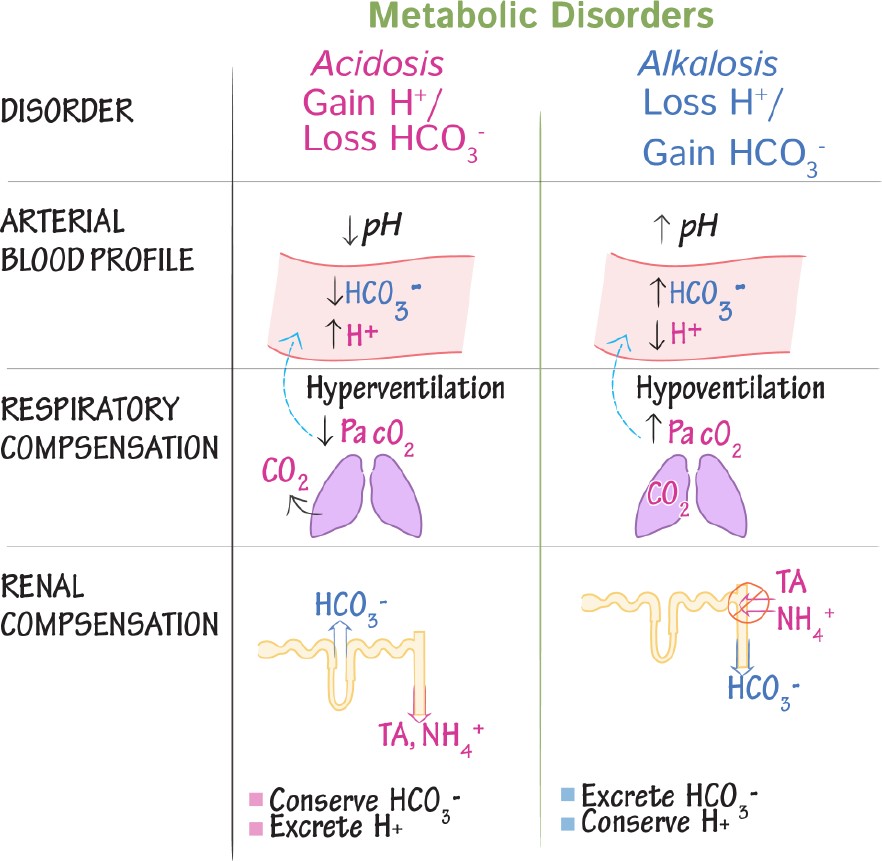
Choice A reason: Metabolic alkalosis is characterized by a high pH and a high HCO3 level, which is not present in this scenario.
Choice B reason: Respiratory acidosis is characterized by a high PaCO2 and a low pH. Although the pH is low here, the PaCO2 is also low, ruling out respiratory acidosis.
Choice C reason: Metabolic acidosis is indicated by a low pH and a low HCO3 level, which aligns with the patient's ABG results.
Choice D reason: Respiratory alkalosis would present with a high pH and a low PaCO2, which is not the case here.
Correct Answer is C
Explanation
Choice A reason: Serosanguineous drainage is a mixture of blood and clear fluid, not typically yellow and thick.
Choice B reason: Serous drainage is clear and watery, not yellow and thick.
Choice C reason: Purulent drainage is typically yellow and thick, indicating the presence of pus, which can be a sign of infection.
Choice D reason: Sanguineous drainage is fresh bleeding, bright red in color, not yellow and thick.
Whether you are a student looking to ace your exams or a practicing nurse seeking to enhance your expertise , our nursing education contents will empower you with the confidence and competence to make a difference in the lives of patients and become a respected leader in the healthcare field.
Visit Naxlex, invest in your future and unlock endless possibilities with our unparalleled nursing education contents today