
A nurse is planning priority interventions for a community health program. Which of the following interventions should the nurse include?
Encourage enrollment and attendance at weight reduction programs.
Educate children at a day care center about nutrition and exercise.
Distribute health risk appraisal questionnaires at community functions.
Measure the BMI of older adults at a community senior center.
The Correct Answer is B
Choice A reason: Encouraging enrollment and attendance at weight reduction programs is not a priority intervention, as it targets a specific population and does not address the root causes of obesity. It may also have low participation and adherence rates.
Choice B reason: Educating children at a day care center about nutrition and exercise is a priority intervention, as it promotes primary prevention and health promotion. It can also have a positive impact on the children's health behaviors, attitudes, and outcomes, as well as influence their families and communities.
Choice C reason: Distributing health risk appraisal questionnaires at community functions is not a priority intervention, as it is a passive and indirect approach. It may not reach the most vulnerable or at-risk populations, and it does not provide any education or follow-up.
Choice D reason: Measuring the BMI of older adults at a community senior center is not a priority intervention, as it is a secondary prevention strategy that focuses on screening and detection. It does not address the prevention or management of obesity or its complications.
Nursing Test Bank
Naxlex Comprehensive Predictor Exams
Related Questions
Correct Answer is C
Explanation
Choice A reason: Asking the client if they have been thinking about harming themselves is not the best response, as it may sound accusatory or judgmental. It may also make the client defensive or reluctant to share their feelings. The nurse should assess the client's suicide risk later, after establishing rapport and trust.
Choice B reason: Asking the client how long they have been feeling this way is not the most appropriate response, as it may imply that the nurse is more interested in the duration of the problem than the client's current situation. It may also suggest that the nurse expects the client to have a clear timeline of their feelings, which may not be the case.
Choice C reason: Telling the client to share what is going on with them right now is the best response, as it shows empathy and genuine interest in the client's perspective. It also invites the client to express their thoughts and emotions, and helps the nurse identify the factors that contribute to the client's sense of meaninglessness.
Choice D reason: Asking the client if they really think their life has no purpose is not a helpful response, as it may sound dismissive or sarcastic. It may also make the client feel invalidated or misunderstood, and reinforce their negative beliefs. The nurse should avoid challenging the client's statements, and instead explore the reasons behind them.
Correct Answer is D
Explanation
Choice A reason: A child who has a BMI of 18 is not the highest priority, as it is within the normal range for children. BMI, or body mass index, is a measure of weight relative to height. A BMI of 18 is considered healthy for children aged 2 to 20 years, according to the Centers for Disease Control and Prevention (CDC). The nurse should monitor the child's growth and development and provide nutrition education as needed.
Choice B reason: An adolescent who has scoliosis is not the highest priority, as it is a common and usually mild condition. Scoliosis is a sideways curvature of the spine that affects about 3% of adolescents. Most cases of scoliosis are mild and do not require treatment, although some may need braces or surgery. The nurse should refer the adolescent to a specialist for further evaluation and management.
Choice C reason: An adolescent who has psoriasis is not the highest priority, as it is a chronic and non-contagious condition. Psoriasis is a skin disorder that causes red, scaly patches on the skin that may itch or burn. Psoriasis is not curable, but it can be controlled with medications, creams, or light therapy. The nurse should provide education and support to the adolescent and encourage them to seek medical care as needed.
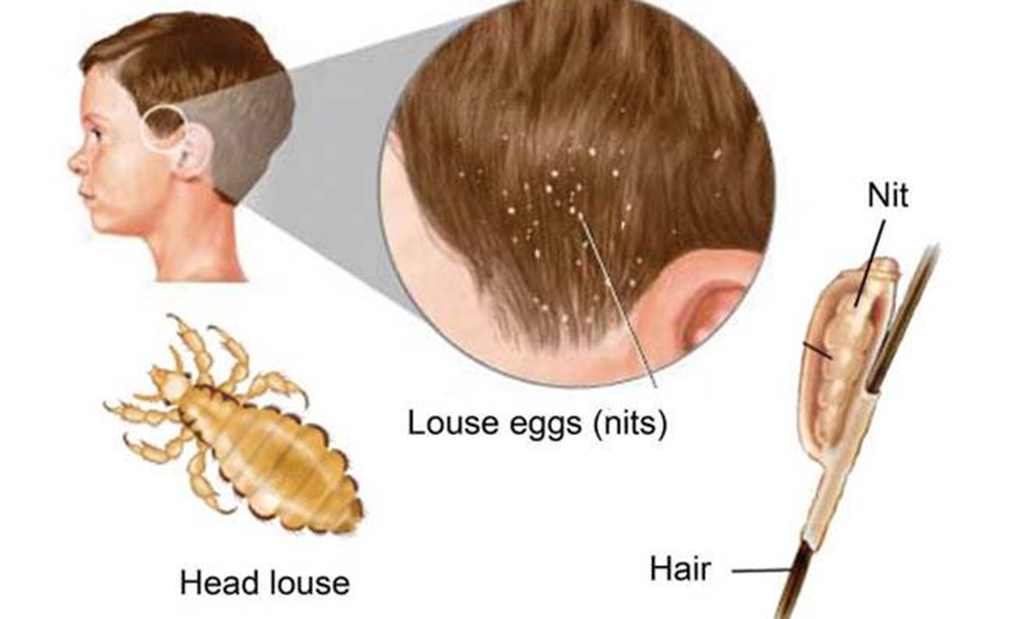
Choice D reason: A child who has nits is the highest priority, as it indicates a parasitic infestation that can spread to others. Nits are the eggs of head lice, which are tiny insects that live on the scalp and feed on blood. Head lice can cause itching, irritation, and infection of the scalp. The nurse should isolate the child and notify the parents and the school staff. The nurse should also provide instructions on how to treat the infestation and prevent reinfestation.
Whether you are a student looking to ace your exams or a practicing nurse seeking to enhance your expertise , our nursing education contents will empower you with the confidence and competence to make a difference in the lives of patients and become a respected leader in the healthcare field.
Visit Naxlex, invest in your future and unlock endless possibilities with our unparalleled nursing education contents today