
A nurse is planning care for a client who has a new prescription for parenteral nutrition (PN) in 20% dextrose and fat emulsions.
Which of the following is an appropriate action to include in the plan of care?
Change the PN infusion bag every 48 hr.
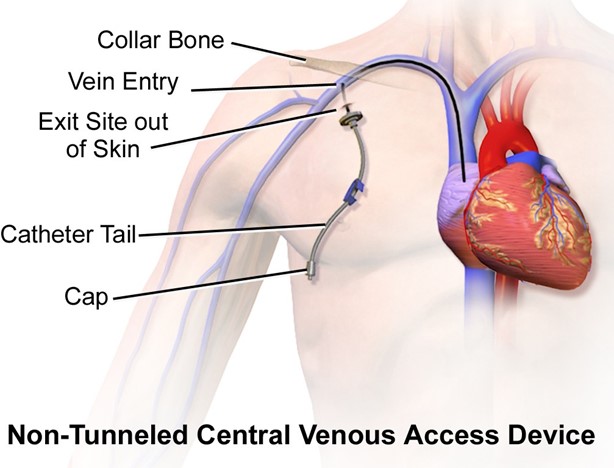
Prepare the client for a central venous line.
Obtain random blood glucose daily.
Administer the PN and fat emulsion separately.
The Correct Answer is B
Prepare the client for a central venous line.
Parenteral nutrition (PN) with 20% dextrose and fat emulsions is a hypertonic solution that requires infusion through a central venous line to prevent damage to peripheral veins.
Choice A is wrong because the PN infusion bag should be changed every 24 hours, not every 48 hours.
Choice C is wrong because blood glucose should be monitored more frequently than once daily when initiating PN therapy.
Choice D is wrong because PN and fat emulsions can be administered together in a total nutrient admixture (TNA)1.
Nursing Test Bank
Naxlex Comprehensive Predictor Exams
Related Questions
Correct Answer is C
Explanation
This is a contraindication for receiving magnet therapy for pain relief because the magnetic field generated by the therapy can interfere with the functioning of the implanted defibrillator.
Choice A is wrong because having a prescription for metoprolol is not a contraindication for receiving magnet therapy for pain relief.
Choice B is wrong because being allergic to penicillin is not a contraindication for receiving magnet therapy for pain relief.
Choice D is wrong because having a history of alcohol use disorder is not a contraindication for receiving magnet therapy for pain relief.
Correct Answer is B
Explanation
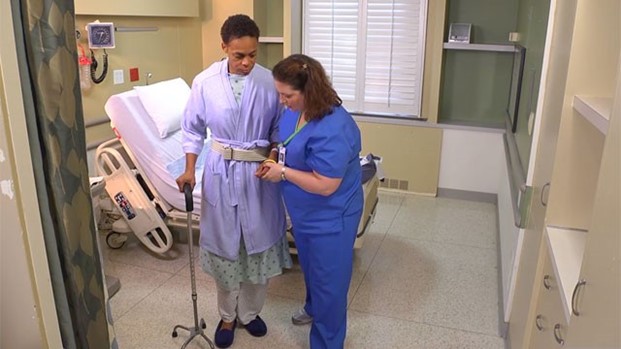
Assisting with ambulation for a client who has a pulmonary infection.
Assistive personnel can perform basic nursing care functions such as assisting patients with mobility.
Choice A is wrong because showing a client how to use an incentive spirometer prior to surgery requires more specialized knowledge and training.
Choice C is wrong because irrigating a client’s infected surgical wound is a more complex medical procedure that should be performed by a licensed nurse.
Choice D is wrong because inserting a glycerin suppository for a client who is constipated is also a more complex medical procedure that should be performed by a licensed nurse.
Whether you are a student looking to ace your exams or a practicing nurse seeking to enhance your expertise , our nursing education contents will empower you with the confidence and competence to make a difference in the lives of patients and become a respected leader in the healthcare field.
Visit Naxlex, invest in your future and unlock endless possibilities with our unparalleled nursing education contents today