
A nurse is caring for a client who has lung cancer and is scheduled for a lobectomy. The nurse should prepare the client to expect which of the following after the procedure?
Pulmonary function studies
A sternal incision
Moderate pain
A chest tube
The Correct Answer is D
Choice A reason:
While pulmonary function studies are an important part of the preoperative assessment and postoperative follow-up for lung cancer patients, they are not typically something a patient would be immediately prepared for post-lobectomy. These studies are usually scheduled for a later date to assess the impact of the surgery on lung function.
Choice B reason:
A sternal incision is not commonly associated with a lobectomy, which involves an incision in the chest wall, not the sternum. Sternal incisions are more often related to procedures that require access to the heart or the central chest area, such as open-heart surgery.
Choice C reason:
Moderate pain is expected after any major surgical procedure, including a lobectomy. However, pain management is a standard part of postoperative care, and patients are typically informed about pain control measures rather than being prepared to expect pain as a postoperative event.
Choice D reason:
The placement of a chest tube is a standard part of care following a lobectomy. The chest tube allows for drainage of fluid and air from the pleural space, ensuring proper lung expansion and preventing complications such as pneumothorax. Patients should be educated about the chest tube's purpose, care, and the sensations they may experience while the tube is in place.
Nursing Test Bank
Naxlex Comprehensive Predictor Exams
Related Questions
Correct Answer is A
Explanation
Choice A reason:
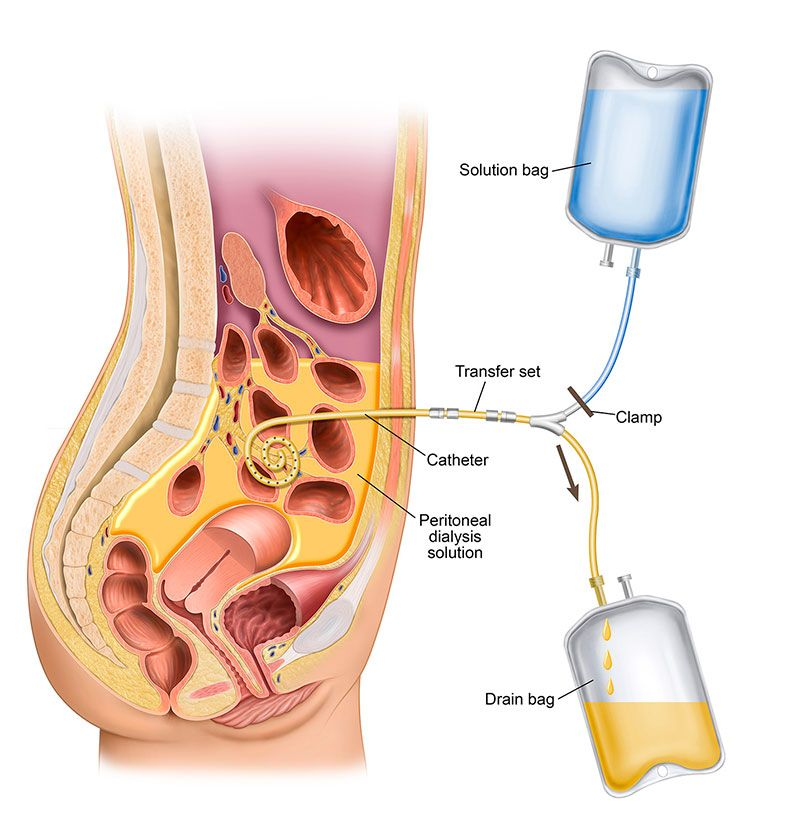
Nausea and vomiting are common symptoms of peritonitis, which can occur in clients receiving peritoneal dialysis. These symptoms result from the irritation and inflammation of the peritoneum, the membrane lining the abdominal cavity.
Choice B reason:
Hyperactive bowel sounds are not typically associated with peritonitis. In fact, bowel sounds may be diminished or absent due to the inflammatory process and potential ileus associated with peritonitis.
Choice C reason:
Bradycardia, or a slower than normal heart rate, is not a common manifestation of peritonitis. Peritonitis can cause tachycardia, an increased heart rate, as the body responds to inflammation and infection.
Choice D reason:
Increased urinary output is not a manifestation of peritonitis. Peritoneal dialysis involves the peritoneal cavity and not the urinary system directly. Peritonitis may actually lead to decreased urine output if the infection causes systemic effects.
Correct Answer is B
Explanation
Choice A reason:
Antinuclear antibody (ANA) is a test used to help diagnose autoimmune disorders, including RA. However, ANA is not typically used to monitor the effectiveness of treatment with aspirin in RA. Aspirin is an anti-inflammatory medication, and its effectiveness would not be directly measured by changes in ANA levels.
Choice B reason:
Erythrocyte sedimentation rate (ESR) is a blood test that can detect inflammation in the body and is commonly used to assess the severity of inflammation in patients with RA. Aspirin can reduce inflammation, so a decrease in ESR can indicate the effectiveness of aspirin therapy in managing RA symptoms.
Choice C reason:
Rheumatoid factor (RF) is an antibody that can be present in the blood of people with RA. While RF can be used to help diagnose RA, it is not typically used to monitor the effectiveness of aspirin therapy. RF levels can remain elevated even when symptoms are well-controlled.
Choice D reason:
White blood cell (WBC) count is a measure of the body's immune response and can be elevated in cases of infection or inflammation. However, WBC count is not specifically used to monitor the effectiveness of aspirin therapy in RA. Aspirin's primary effect is on reducing inflammation and pain, not necessarily on altering WBC counts.
Whether you are a student looking to ace your exams or a practicing nurse seeking to enhance your expertise , our nursing education contents will empower you with the confidence and competence to make a difference in the lives of patients and become a respected leader in the healthcare field.
Visit Naxlex, invest in your future and unlock endless possibilities with our unparalleled nursing education contents today