
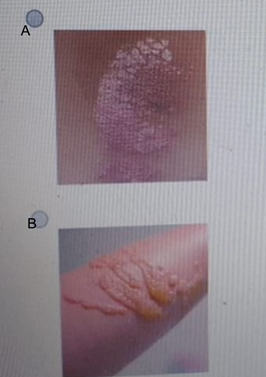
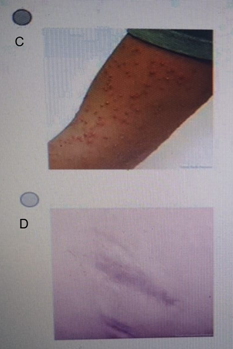
A nurse is assessing a client who is receiving treatment for psoriasis. Which of the following images depicts what the nurse should expect to observe?
A
B
C
D
The Correct Answer is A
A. This image shows well-demarcated, erythematous plaques covered with silvery-white scales—classic features of plaque psoriasis. These lesions typically appear on extensor surfaces like the elbows, knees, and scalp, and may itch or crack.
B. This image shows a yellow crusting lesion which suggests impetigo or a secondary skin infection, not psoriasis. Impetigo typically presents with honey-colored crusts, caused by bacterial infection, usually. Psoriasis lesions are usually dry and scaly, not moist or oozing.
C. This image shows red bumps on arm suggesting an allergic reaction, folliculitis, or possibly contact dermatitis. These are small papules often scattered or in clusters, and do not have the thick scaling seen in psoriasis.
D. The fourth image shows linear striae-like marks likely striae distensae (stretch marks), unrelated to psoriasis. Stretch marks are atrophic, linear scars typically due to skin stretching from growth or weight changes. They lack inflammation, plaques, and scale—all key signs of psoriasis.
Nursing Test Bank
Naxlex Comprehensive Predictor Exams
Related Questions
Correct Answer is ["A","C","D"]
Explanation
A. "Empty the ostomy pouch when it becomes one-third full of contents.": It is important to empty the ostomy pouch when it is about one-third full to prevent leakage and pressure on the stoma. This helps avoid skin irritation and maintain comfort.
B. "Expect the stoma to turn a purple-blue color as it heals.": A stoma should be a reddish-pink color. A purple or blue color indicates poor circulation and may signal complications such as ischemia, which requires immediate attention.
C. "Cut the opening of the pouch an inch larger than the stoma.": The opening of the ostomy pouch should be cut about one-quarter to one-half inch larger than the stoma to prevent irritation or pressure on the stoma. This ensures a good fit and reduces risk of skin damage.
D. "Place a piece of gauze over the stoma while changing the pouch.": Placing gauze over the stoma during pouch changes protects the skin around the stoma fromcontact with stooland absorbs any drainage.
E. "Use povidone-iodine to clean around the stoma.": Povidone-iodine is too harsh for cleaning the stoma area and may cause skin irritation. The recommended cleaning solution is warm water and mild soap, followed by proper drying, to avoid skin damage and infection.
Correct Answer is A
Explanation
A. "Would you like to discuss other treatment options with your provider?": This response invites the client to express concerns and explore alternative treatments. It shows respect for their preferences and promotes a collaborative decision-making process.
B. "Regular monitoring is not difficult and will ensure that you remain healthy.": This response downplays the client’s concerns and could be seen as dismissive. It focuses more on the ease of monitoring than addressing the client’s discomfort.
C. "Your provider wants you to take this medication.": Using authority to justify medication may cause the client to feel coerced rather than involved in their treatment. This doesn’t address their concerns and may erode trust.
D. "Why don't you want to undergo monitoring?": Asking why could put the client on the defensive and may make them feel judged. It doesn’t foster open communication or understanding of the client’s concerns.
Whether you are a student looking to ace your exams or a practicing nurse seeking to enhance your expertise , our nursing education contents will empower you with the confidence and competence to make a difference in the lives of patients and become a respected leader in the healthcare field.
Visit Naxlex, invest in your future and unlock endless possibilities with our unparalleled nursing education contents today