
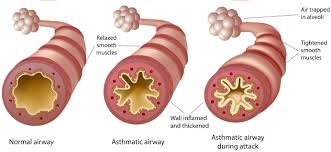
A client is being treated for an acute exacerbation of asthma. Which assessment finding indicates to the nurse that the goals of treatment are being met?
The nurse observes the client using accessory muscles while breathing.
The client is able to answer questions in full sentences.
Lung auscultation demonstrates diminished breath sounds.
The client appears restless and anxious when resting in bed.
The Correct Answer is B
Choice A Reason:
Using accessory muscles while breathing is a sign of respiratory distress and indicates that the client is working harder to breathe. This is not a desired outcome of treatment and suggests that the asthma exacerbation is not under control.
Choice B Reason:
The ability to answer questions in full sentences suggests that the client's airway is not severely obstructed, which is a positive sign of effective asthma treatment. When asthma is well-controlled, individuals should not experience significant shortness of breath that limits their ability to speak.
Choice C Reason:
Diminished breath sounds can be a sign of severe airway obstruction and are not indicative of effective asthma treatment. Ideally, lung auscultation should reveal clear breath sounds without wheezing, indicating good air movement throughout the lungs.
Choice D Reason:
Restlessness and anxiety can be symptoms of hypoxia, a condition where the body or a region of the body is deprived of adequate oxygen supply. This is not a sign of effective asthma treatment and may indicate that the client's asthma is not well-managed.
Nursing Test Bank
Naxlex Comprehensive Predictor Exams
Related Questions
Correct Answer is A
Explanation
Choice a reason:
Decreasing intake of vitamin K-rich foods is not recommended for the prevention of osteoporosis. Vitamin K is essential for bone health because it helps in the synthesis of proteins required for bone formation and mineralization. A deficiency in vitamin K can lead to weakened bone structure and increased risk of fractures. Foods rich in vitamin K include green leafy vegetables like spinach, kale, and broccoli, which should be a part of a balanced diet aimed at preventing osteoporosis.
Choice b reason:
Reducing sodium intake can be beneficial for bone health. Excessive sodium consumption can cause calcium loss through urine, which may contribute to bone demineralization and increase the risk of osteoporosis. The American Heart Association recommends no more than 2,300 milligrams a day and moving toward an ideal limit of no more than 1,500 mg per day for most adults.
Choice c reason:
Avoiding carbonated soda, especially those containing phosphoric acid, is advisable for osteoporosis prevention. Some studies suggest that phosphoric acid in soda can leach calcium from bones and decrease calcium absorption, potentially weakening bones and increasing the risk of osteoporosis.
Choice d reason:
Limiting caffeinated beverages is a prudent step in preventing osteoporosis. Caffeine can interfere with calcium absorption and lead to its increased excretion in urine. It is generally recommended to limit caffeine intake to about 400 mg per day, equivalent to around four 8-ounce cups of brewed coffee.
Correct Answer is A
Explanation
Choice A Reason
A negative sputum culture is the most definitive indicator of the effectiveness of tuberculosis (TB) treatment. When a patient with active TB starts on medication, the goal is to eliminate the Mycobacterium tuberculosis bacteria from the body. A sputum culture that turns from positive to negative signifies that the bacteria have been eradicated from the respiratory secretions, indicating successful treatment.
Choice B Reason
While decreased hemoptysis (coughing up blood) is a positive sign and indicates an improvement in the patient's condition, it is not the most reliable parameter for determining the effectiveness of TB therapy. Hemoptysis may decrease as the patient's overall condition improves, but it does not confirm the eradication of the TB bacteria.
Choice C Reason
An improved chest x-ray can show a reduction in the lesions caused by TB, which is a good sign of recovery. However, chest x-rays cannot confirm whether the TB bacteria have been completely eliminated. They are more of a supportive indicator rather than a definitive one.
Choice D Reason
A decreased rate of coughing is another sign that the patient is responding to treatment, as coughing is a primary symptom of TB. However, similar to hemoptysis and chest x-ray improvements, a decrease in coughing does not necessarily mean that the TB bacteria have been fully cleared from the body.
Whether you are a student looking to ace your exams or a practicing nurse seeking to enhance your expertise , our nursing education contents will empower you with the confidence and competence to make a difference in the lives of patients and become a respected leader in the healthcare field.
Visit Naxlex, invest in your future and unlock endless possibilities with our unparalleled nursing education contents today