
A client has been recently diagnosed with terminal cancer. The client states, "This cannot be happening to me." The nurse identifies that the client is in what stage of grieving process?
Depression
Anger
Bargaining
Denial
The Correct Answer is D
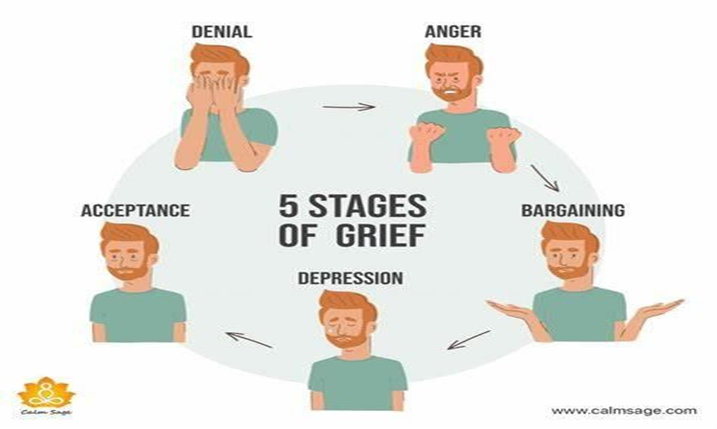
D. Denial is often the initial stage of the grieving process, characterized by disbelief or avoidance of the reality of the situation. Clients may refuse to accept the diagnosis or its implications, clinging to the hope that it is not true. The client's statement of "This cannot be happening to me" is consistent with denial, as they are expressing disbelief or resistance to the reality of their diagnosis.
A. This stage involves feelings of sadness, despair, and hopelessness. While depression is a common response to a terminal diagnosis, the client's statement of "This cannot be happening to me" suggests that they may still be in an earlier stage of grief.
B. Anger is another common stage of the grieving process, characterized by feelings of frustration, resentment, and hostility. Clients may direct their anger towards themselves, others, or even a higher power. While anger can be a prominent reaction to a terminal diagnosis, the client's statement does not explicitly express anger but rather disbelief or resistance.
C. Bargaining is a stage in which individuals may attempt to negotiate or make deals in an effort to change or postpone the inevitable outcome. For example, a client may pray for more time or promise to change their behavior in exchange for a better outcome. The client's statement of "This cannot be happening to me" does not reflect bargaining but rather denial or disbelief.
Nursing Test Bank
Naxlex Comprehensive Predictor Exams
Related Questions
Correct Answer is A
Explanation
A. Positioning the primary IV solution bag higher than the piggyback medication bag creates a pressure gradient, allowing the primary solution to infuse first. Once the primary solution has finished, the secondary piggyback medication automatically starts infusing. This setup ensures that the primary solution is fully infused before the piggyback medication begins.
B. Placing the primary IV solution bag lower than the piggyback medication bag is not the standard practice. This setup would create a pressure gradient that could result in the piggyback medication infusing before the primary solution, which is not desirable. It could lead to incomplete infusion of the primary solution and compromise the effectiveness of the treatment.
C. Positioning the primary IV solution bag at the same height as the piggyback bag does not create a pressure gradient for sequential infusion. As a result, both solutions would flow at the same rate, and it would be challenging to control the order of infusion. This setup is not appropriate for administering IV antibiotics via piggyback because it does not ensure the proper sequence of infusion.
D. The height of the IV solution relative to the insertion site is essential for proper infusion and preventing complications such as infiltration or phlebitis. Ideally, the IV solution should be hung at a height that allows for a gentle flow of fluid into the vein without causing excessive pressure or backflow. Placing the IV solution lower than the insertion site helps facilitate gravity-assisted flow into the vein.
Correct Answer is D
Explanation
D. This is the most appropriate technique for evaluating the success of teaching a client a psychomotor skill. A return demonstration involves the client independently performing the skill they have been taught while the nurse observes. This allows the nurse to assess the client's ability to execute the skill correctly, including aspects such as technique, coordination, and safety precautions. Additionally, the nurse can provide immediate feedback and correction if necessary, enhancing the client's learning experience.
A. While answering oral questions can assess the client's understanding of theoretical or conceptual knowledge, it may not effectively evaluate their ability to perform a psychomotor skill. Psychomotor skills involve physical actions and coordination, which cannot be adequately assessed through verbal responses alone.
B. Participating in a discussion group can facilitate sharing of experiences and perspectives among clients, but it may not be the most effective method for evaluating the client's ability to perform a psychomotor skill. Discussion groups are more suitable for exploring attitudes, beliefs, and understanding of concepts rather than assessing physical skills.
C. Written tests typically assess cognitive understanding and retention of information rather than the ability to perform psychomotor skills. While written tests can evaluate knowledge about the steps involved in a skill, they do not directly assess the client's ability to execute the skill itself.
Whether you are a student looking to ace your exams or a practicing nurse seeking to enhance your expertise , our nursing education contents will empower you with the confidence and competence to make a difference in the lives of patients and become a respected leader in the healthcare field.
Visit Naxlex, invest in your future and unlock endless possibilities with our unparalleled nursing education contents today