
When using a butterfly needle for venipuncture on dorsal hand veins, which of the following actions should the phlebotomist take?
Position the needle at a 45° angle to the skin.
Hold the needle by the wings of the butterfly.
Instruct the patient to hold the collection tubes.
Apply the tourniquet at the antecubital area.
The Correct Answer is B
Choice A Reason:
Positioning the needle at a 45° angle to the skin is not the recommended approach for venipuncture using a butterfly needle on dorsal hand veins. The correct angle for insertion is usually less than 45°, often around 15-30°, to ensure a shallow entry and reduce the risk of going through the vein.
Choice B Reason:
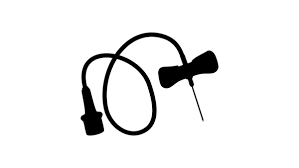
Holding the needle by the wings of the butterfly is the correct technique. This allows for better control and stability during insertion. The wings are designed to be held between the thumb and forefinger, providing an easy grip for the phlebotomist to maneuver the needle with precision.
Choice C Reason:
Instructing the patient to hold the collection tubes is not standard practice and could lead to pre-analytical errors. The phlebotomist should maintain control of the tubes to ensure proper blood flow and fill volume, as well as to prevent contamination or accidents.
Choice D Reason:
Applying the tourniquet at the antecubital area is not specific to the use of a butterfly needle for venipuncture on dorsal hand veins. While a tourniquet is used to engorge the veins and make them more prominent, its placement may vary depending on the selected puncture site and is not the action in question here.
Nursing Test Bank
Naxlex Comprehensive Predictor Exams
Related Questions
Correct Answer is A
Explanation
Choice A reason:
The specimen source is critical information that must be included with a non-blood specimen delivered to the laboratory. It identifies the origin of the specimen, such as urine, cerebrospinal fluid, or a swab from a specific site. This information is essential for the laboratory to process and analyze the specimen appropriately.
Choice B reason:
While the specimen color may be noted for certain types of specimens, it is not a required piece of information for all non-blood specimens. Color can be an important characteristic for some analyses, but it is not as critical as the specimen source for laboratory processing.
Choice C reason:
Specimen temperature is not typically documented upon delivery to the laboratory unless the specimen requires temperature control during transport, such as certain microbiological cultures. In general, the temperature at the time of collection is not a standard requirement.
Choice D reason:
Specimen clarity might be relevant for specific tests, such as urine analysis, where clarity can indicate the presence of substances like proteins or crystals. However, it is not a universally required piece of information for all non-blood specimens.
Correct Answer is C
Explanation
Choice A reason:
While ensuring that employees receive training regarding workplace hazards is important, it is not the general concept behind standard precautions. Training is a part of the broader safety measures but does not encompass the core idea of standard precautions, which is to prevent infection transmission.
Choice B reason:
Providing information about hazardous chemicals within the environment is related to the Right-to-Know standard, which is part of the Hazard Communication Standard. This is not the main concept of standard precautions, which focus on preventing the spread of infections, particularly in healthcare settings.
Choice C reason:
Assuming that all body fluids are potentially infected with bloodborne pathogens is the essence of standard precautions. This approach dictates that healthcare workers should treat all body fluids as if they are infectious and therefore use appropriate protective measures to prevent exposure and transmission of diseases.
Choice D reason:
Maintaining a workplace free of environmental hazards is a broad occupational safety goal but does not specifically describe the general concept behind standard precautions. Standard precautions are more focused on infection control practices rather than the broader scope of all environmental hazards.
Whether you are a student looking to ace your exams or a practicing nurse seeking to enhance your expertise , our nursing education contents will empower you with the confidence and competence to make a difference in the lives of patients and become a respected leader in the healthcare field.
Visit Naxlex, invest in your future and unlock endless possibilities with our unparalleled nursing education contents today