
A phlebotomist is preparing to draw blood from a patient for therapeutic drug monitoring. Which of the following questions should the phlebotomist ask?
"When was your last dose of lithium?"
"For how long have you been fasting?"
"When did you have your last alcoholic beverage?"
"Have you finished drinking the glucose solution?"
The Correct Answer is A
Choice A Reason:
Asking "When was your last dose of lithium?" is crucial for therapeutic drug monitoring (TDM). TDM is used to tailor dosages and maintain therapeutic levels in a patient’s bloodstream, especially for drugs with narrow therapeutic indices like lithium. The timing of the last dose can significantly affect blood levels, and knowing this information helps in interpreting the results accurately.
Choice B Reason:
While knowing the fasting status of a patient may be relevant for certain tests, it is not typically critical for TDM unless the medication being monitored is affected by food intake. Lithium levels are not significantly influenced by fasting, so this question is less relevant than knowing the timing of the last dose.
Choice C Reason:
Inquiring about the last alcoholic beverage is important if alcohol could interfere with the medication's metabolism or the test's accuracy. However, for lithium TDM, alcohol consumption is not as directly relevant as the timing of the last dose. Alcohol does not typically alter lithium levels unless it affects the patient's hydration status.
Choice D Reason:
Asking if the patient has finished drinking the glucose solution would be pertinent if conducting a glucose tolerance test. However, this is not relevant for TDM of lithium, as the glucose solution does not interfere with lithium levels or the TDM process.
In conclusion, for therapeutic drug monitoring, particularly for lithium, the most critical question is regarding the timing of the last dose. This information is essential to ensure that the blood levels reflect the peak or trough concentration, depending on what is being measured, and to avoid misinterpretation that could lead to inappropriate dosing adjustments.
Nursing Test Bank
Naxlex Comprehensive Predictor Exams
Related Questions
Correct Answer is C
Explanation
Choice A Reason:
Povidone-iodine is an antiseptic used for skin disinfection before and after surgery. It has a broad spectrum of antimicrobial activity, but it is not the preferred choice for capillary blood collection due to the potential interference with certain laboratory tests. Povidone-iodine needs to be completely dried to avoid hemolysis of the sample, which can affect test results.
Choice B Reason:
Hand sanitizer is generally used for hand hygiene and not for the disinfection of the site for blood specimen collection. While it is effective in killing germs on the skin, it contains emollients and gelling agents that can contaminate the blood sample and interfere with laboratory tests.
Choice C Reason:
70% isopropyl alcohol is the most commonly used disinfectant for aseptic technique in capillary blood collection. It is effective against a broad range of microorganisms and evaporates quickly, leaving no residue that could contaminate the sample. It is important to allow the alcohol to dry completely before performing the puncture to prevent stinging and sample dilution.
Choice D Reason:
A 10% chlorine bleach solution is not typically used for skin disinfection in blood collection due to its harshness and potential to cause skin irritation and damage. It is more commonly used for disinfecting surfaces and equipment in healthcare settings.
Correct Answer is A
Explanation
Choice A Reason:
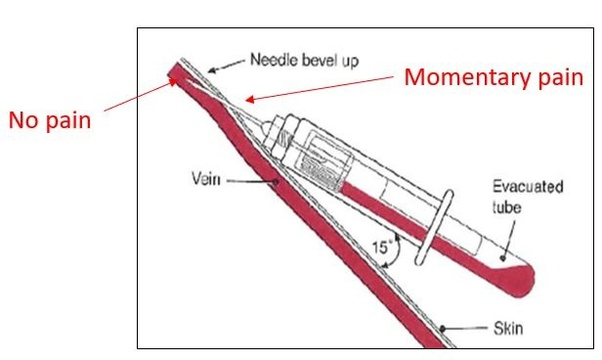
Anchoring a vein is a technique used to stabilize the vein during venipuncture to prevent it from rolling. The recommended practice is to anchor the vein 1 to 2 inches below the puncture site. This is done by applying gentle traction on the skin downward with the thumb, which helps to stabilize the vein and facilitate the insertion of the needle.
Choice B Reason:
Anchoring 1 to 2 inches above the puncture site is not the standard practice. This position would not provide the necessary tension on the vein to prevent it from rolling and could make the venipuncture more difficult.
Choice C Reason:
Anchoring 2 inches left of the puncture site does not provide the correct angle or tension for stabilizing the vein for a venipuncture and is not a recommended technique.
Choice D Reason:
Anchoring 1 inch right of the puncture site is also not a recommended practice. Similar to anchoring to the left, this does not provide the proper stabilization needed for a successful venipuncture.
Whether you are a student looking to ace your exams or a practicing nurse seeking to enhance your expertise , our nursing education contents will empower you with the confidence and competence to make a difference in the lives of patients and become a respected leader in the healthcare field.
Visit Naxlex, invest in your future and unlock endless possibilities with our unparalleled nursing education contents today