
The prescription reads for diphenhydramine 10 mg PO every 4-6 hours as needed for runny nose and allergy symptoms. Using the label below, how many mL will the nurse teach the parent to administer? Enter a numeric value only. Answer to the nearest whole mL
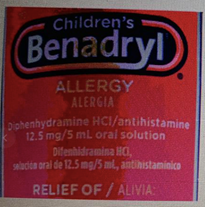
The Correct Answer is ["4"]
1. Determine the concentration of the diphenhydramine:
The label states 12.5 mg/5 mL.
2. Set up a proportion to find the volume (in mL) needed:
12.5 mg / 5 mL = 10 mg / x mL
3. Solve for x:
Cross-multiply: 12.5x = 10 * 5
12.5x = 50
x = 50 / 12.5
x = 4 mL
Answer: The nurse should teach the parent to administer 4 mL.
Nursing Test Bank
Naxlex Comprehensive Predictor Exams
Related Questions
Correct Answer is D
Explanation
A) Planning: The planning phase involves setting goals and determining the actions needed to achieve those goals. While the nurse may have planned to administer the medications through the nasogastric tube, the specific actions of crushing the tablets, mixing them with fluid, and administering them fall under a different phase. Therefore, planning is not the correct phase for the actions described.
B) Diagnosis: The diagnosis phase is when the nurse identifies and formulates nursing diagnoses based on data collected about the patient’s health status. The actions of preparing and administering medication do not fall under this phase, as diagnosis pertains to assessing health problems or needs.
C) Evaluation: Evaluation is the phase where the nurse assesses whether the goals or outcomes of the care plan have been met. The nurse would evaluate the effectiveness of the medication administration after it has been done, but the actual action of giving the medication is part of implementation, not evaluation.
D) Implementation: Implementation is the phase where the nurse carries out the planned interventions, including administering medications. In this case, the nurse is taking specific steps to prepare and administer the crushed tablets down the nasogastric tube, which is a direct action related to the care plan. This phase involves performing the tasks necessary to carry out the interventions that were decided during the
planning phase.
E) Assessment: Assessment involves collecting data about the client’s health status, such as physical examination, history, and vital signs. The actions taken to crush and administer medications are not part of the assessment phase, which focuses on gathering information, not delivering care.
Correct Answer is D
Explanation
A) Evaluation: Evaluation is the phase where the nurse assesses whether the goals or outcomes of the care plan have been met. It involves determining if the interventions provided were effective in achieving the desired outcomes. In this scenario, the nurse is still
gathering information before the action is taken, so evaluation is not the correct phase.
B) Planning: Planning is the phase in the nursing process where the nurse develops a care plan, which includes setting goals and determining interventions based on the client's needs. Although reviewing the medical record and blood glucose level is important for planning the administration of insulin, this is more about gathering data rather than forming a plan of care.
C) Implementation: Implementation refers to the actual delivery of the nursing interventions or actions. In this case, administering the insulin would be part of the implementation phase, but reviewing the medical history and obtaining a fingerstick blood glucose reading are steps taken before implementing the medication.
D) Assessment: The nurse is collecting pertinent information about the client’s condition, including reviewing the medical record and obtaining the blood glucose level. Assessment is the first step in the nursing process and involves gathering information to help guide clinical decisions.
E) Diagnosis: Diagnosis is the phase in which the nurse analyzes the assessment data to identify the client’s health problems or potential risks. While the nurse is collecting data, the diagnosis comes after the assessment phase, when the nurse has enough information to make a clinical judgment about the client's health status.
Whether you are a student looking to ace your exams or a practicing nurse seeking to enhance your expertise , our nursing education contents will empower you with the confidence and competence to make a difference in the lives of patients and become a respected leader in the healthcare field.
Visit Naxlex, invest in your future and unlock endless possibilities with our unparalleled nursing education contents today