
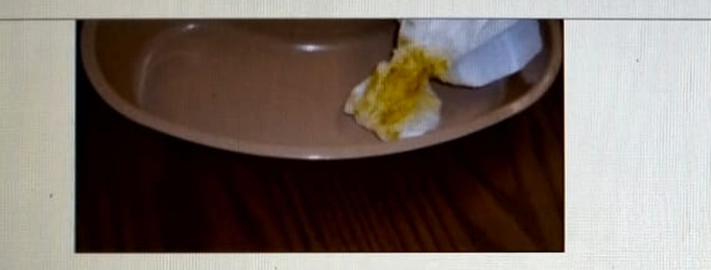
The practical nurse (PN) explains to a client how to obtain a sputum specimen and the client indicates understanding the procedure. After the PN leaves the room, the client obtains the specimen and notifies the PN. When the PN arrives to collect the specimen it appears as seen in the picture (in a non sterile basin with tissue paper). Which action should the PN take?
Place a biohazard bag over the basin and seal the bag securely for transport to the lab.
Assist the client in obtaining another specimen coughed directly into a sterile cup.
Use a wooden applicator to place the sputum specimen in a sterile container.
Apply gloves and place the tissue and specimen in a container for transport to the lab.
The Correct Answer is B
A. Placing a biohazard bag over the basin and sealing it is not appropriate because the specimen should have been collected directly into a sterile container, and the specimen's current state in a non-sterile basin is not acceptable for lab analysis.
B. Assisting the client in obtaining another specimen is necessary to avoid cross contamination.
C. Using a wooden applicator to place the sputum specimen in a sterile container is the incorrect as it breaches sterility.
D. Applying gloves and placing the tissue and specimen in a container is incorrect as the specimen must be in a sterile container from the start. Using a non-sterile basin means the specimen might be contaminated.
Nursing Test Bank
Naxlex Comprehensive Predictor Exams
Related Questions
Correct Answer is A
Explanation
A. Based on the understanding of 90-90 skeletal traction and the common complications associated with pin sites, the practical nurse should focus on assessing the areas around the pin insertion sites in the femur and possibly the tibia for any signs of inflammation.
B. the back is not the correct location
C. The sole of the foot is not the correct location
D. The unaffected limb is not the appropriate location.
Correct Answer is ["C","D"]
Explanation
A. Teaching the client with fluid restrictions how to measure urine output requires specialized knowledge and skills. This task should be performed by a licensed nurse to ensure accurate instruction and patient understanding.
B. Irrigating an indwelling urinary catheter involves sterile technique and specialized knowledge, which should be performed by a licensed nurse. This task requires specific training to prevent complications.
C. Transporting a urine culture sample to the laboratory can be safely assigned to a UAP. It involves routine tasks that do not require advanced clinical skills and is essential for timely processing of specimens.
D. Emptying the bedside drainage unit for a client with an indwelling urinary catheter can be performed by a UAP. This task involves basic care procedures that support patient hygiene and comfort.
E. Obtaining a post-voided residual (PVR) volume requires a specific clinical skill and understanding of the procedure, which should be performed by a licensed nurse rather than a UAP.
Whether you are a student looking to ace your exams or a practicing nurse seeking to enhance your expertise , our nursing education contents will empower you with the confidence and competence to make a difference in the lives of patients and become a respected leader in the healthcare field.
Visit Naxlex, invest in your future and unlock endless possibilities with our unparalleled nursing education contents today