
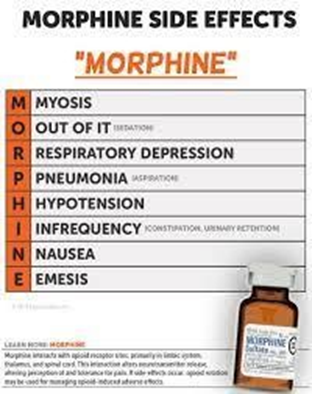
A nurse is assessing a school-age child who is receiving morphine. For which of the following adverse effects should the nurse monitor?
Prolonged wound healing
Nausea
Stevens-Johnson syndrome
Renal failure
The Correct Answer is B
Rationale:
A. This is not a common adverse effect associated with morphine.
B. Nausea is a common adverse effect of morphine and should be monitored for, particularly in pediatric patients.
C. Stevens-Johnson syndrome is a severe allergic reaction and is not typically associated with morphine.
D. While morphine can cause urinary retention, it is not typically associated with renal failure.
Nursing Test Bank
Naxlex Comprehensive Predictor Exams
Related Questions
Correct Answer is B
Explanation
Rationale:
A. Washing the child's hair with ketoconazole shampoo is not typically indicated for treating scabies, which is caused by mites.
B. Treating close contacts is essential to prevent the spread of scabies.
C. Applying petroleum jelly is not an effective treatment for scabies.
D. Soaking combs and brushes in boiling water may help to disinfect them but is not the primary treatment for scabies.
Correct Answer is ["A","B","D","F","G"]
Explanation
Rationale:
A. Cutting and filing the child's fingernails frequently can help prevent further damage from scratching and reduce the risk of infection.
B. Using a mild detergent for the child's laundry can help minimize irritation to the skin.
C. Pimecrolimus cream is a topical immunomodulator that may be used for atopic dermatitis, but the thick layer application is not typically recommended for children due to safety concerns.
D. Informing the guardian that the child will experience occasional flare-ups of the condition helps manage expectations and prepares them for potential recurrence.
E. Atopic dermatitis is not typically contagious, so the statement that the child's condition is contagious when lesions are present is inaccurate.
F. Applying gloves to the child's hands can prevent scratching and further damage to the skin.
G. Applying emollients to the child's skin after bathing helps maintain skin hydration and barrier function, reducing the severity of atopic dermatitis symptoms.
Whether you are a student looking to ace your exams or a practicing nurse seeking to enhance your expertise , our nursing education contents will empower you with the confidence and competence to make a difference in the lives of patients and become a respected leader in the healthcare field.
Visit Naxlex, invest in your future and unlock endless possibilities with our unparalleled nursing education contents today