
Medication A has a half-life of 3 hours. If the nurse administers a single dose of 400 mg of medication A, how much will excrete from the patient’s body after 12 hours?
100 mg
375 mg
150 mg
25 mg
The Correct Answer is D
Choice A Reason:
To determine how much of the medication remains in the body after a certain period, we need to understand the concept of half-life. The half-life of a medication is the time it takes for the concentration of the drug in the bloodstream to reduce by half. For Medication A, the half-life is 3 hours. After 12 hours, which is four half-lives, the amount of medication remaining can be calculated step by step.
Choice B Reason:
Let’s break down the calculation. Initially, the patient receives 400 mg of Medication A. After the first half-life (3 hours), the amount of medication remaining is 400 mg ÷ 2 = 200 mg. After the second half-life (6 hours), the amount remaining is 200 mg ÷ 2 = 100 mg. After the third half-life (9 hours), the amount remaining is 100 mg ÷ 2 = 50 mg. Finally, after the fourth half-life (12 hours), the amount remaining is 50 mg ÷ 2 = 25 mg. Therefore, 375 mg is not a correct answer.
Choice C Reason:
Similarly, 150 mg is not correct. As shown in the detailed calculation, the amount of medication decreases by half every 3 hours. After 12 hours, the remaining amount is 25 mg, not 150 mg. This choice does not align with the half-life calculation.
Choice D Reason:
This is the correct answer. The step-by-step calculation shows that after 12 hours, which is equivalent to four half-lives, the amount of Medication A remaining in the patient’s body is 25 mg. This demonstrates the principle of half-life and how the concentration of a drug decreases over time.
Nursing Test Bank
Naxlex Comprehensive Predictor Exams
Related Questions
Correct Answer is D
Explanation
Choice A: Minimal Effect on Vessels
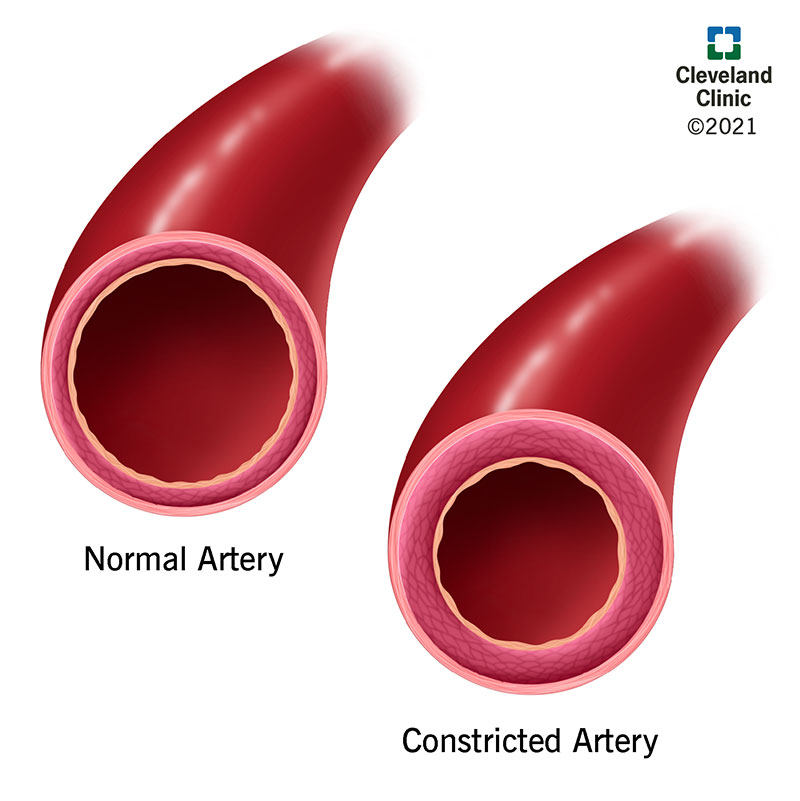
A reduction in blood pH, which indicates acidosis, does not have a minimal effect on blood vessels. Acidosis can significantly impact vascular tone and function. Therefore, this choice is incorrect as it underestimates the physiological changes that occur in response to a decrease in pH.
Choice B: No Effect on Vessels
Similarly, stating that a reduction in blood pH has no effect on vessels is inaccurate. Blood pH is tightly regulated, and deviations from the normal range (7.35-7.45) can lead to significant physiological responses. Acidosis can alter vascular tone, making this choice incorrect.
Choice C: Vasodilation
While vasodilation can occur in response to certain conditions, a reduction in blood pH typically leads to vasoconstriction rather than vasodilation. Vasodilation is more commonly associated with an increase in blood pH (alkalosis) or other factors such as increased levels of nitric oxide or prostaglandins.
Choice D: Vasoconstriction
When the pH of blood reduces, indicating acidosis, it often leads to vasoconstriction. This response is mediated by chemoreceptors that detect changes in pH and stimulate the vasomotor center to increase vascular tone. Vasoconstriction helps to maintain blood pressure and ensure adequate perfusion of vital organs during acidosis. Therefore, this is the correct answer.
Correct Answer is ["B","C","E"]
Explanation
Choice A Reason:
Naming, blaming, and shaming those who make errors is not an effective way to prevent medication errors. This approach can create a culture of fear and silence, where healthcare professionals may be less likely to report errors or near misses. Instead, fostering a culture of safety and openness encourages reporting and learning from mistakes, which is crucial for preventing future errors.
Choice B Reason:
Using electronic medical order entry systems is an effective way to prevent medication errors. These systems help reduce errors related to handwriting, transcription, and dosage calculations. They can also provide clinical decision support, alerting prescribers to potential drug interactions, allergies, and other contraindications. This technology enhances accuracy and efficiency in the medication ordering process.
Choice C Reason:
Helping patients to be active, informed members of the healthcare team is another effective strategy. When patients are well-informed about their medications, they can help identify potential errors and ensure they are taking their medications correctly. Patient engagement and education are key components in preventing medication errors and improving overall healthcare outcomes.
Choice D Reason:
Focusing on caregivers who make errors is not an effective strategy for preventing medication errors. Similar to choice A, this approach can lead to a punitive environment that discourages error reporting and transparency. Instead, focusing on system improvements and creating a supportive environment for healthcare professionals is more effective in reducing errors.
Choice E Reason:
Developing nonpunitive approaches to track errors is an effective way to prevent medication errors. A nonpunitive approach encourages healthcare professionals to report errors and near misses without fear of retribution. This allows for the identification of error patterns and the implementation of system-wide changes to prevent future errors. Creating a culture of safety and continuous improvement is essential for reducing medication errors.
Whether you are a student looking to ace your exams or a practicing nurse seeking to enhance your expertise , our nursing education contents will empower you with the confidence and competence to make a difference in the lives of patients and become a respected leader in the healthcare field.
Visit Naxlex, invest in your future and unlock endless possibilities with our unparalleled nursing education contents today