
A nurse working in an outpatient mental health facility is caring for a client who has anxiety and was discharged from an inpatient mental health facility 1 week ago.
A nurse in an outpatient mental health facility is assessing a client who has anxiety. Click to highlight the findings in the Nurses’ Notes that indicate an improvement in the client’s condition. To deselect a finding, click on the finding again.
Client appears to be well-groomed.
Client’s current weight is 54 kg (119 lb).
Client states they are sleeping 5 to 6 hours per night but having an occasional nightmare.
Verbalizes decreased appetite and gastrointestinal discomfort.
Client states, “I feel anxious about leaving my house. I feel like everyone is staring at me and judging me.”
Verbalizes that bullying experienced during high school has led to anxiety.
Client engages in thought-stopping behavioral therapy and cognitive restructuring.
Client reports taking escitalopram 20 mg daily 2 hr after breakfast.
Client appears to be well-groomed.
Client’s current weight is 54 kg (119 lb).
Client states they are sleeping 5 to 6 hours per night but having an occasional nightmare.
Verbalizes decreased appetite and gastrointestinal discomfort.
Client states, “I feel anxious about leaving my house. I feel like everyone is staring at me and judging me.”
Verbalizes that bullying experienced during high school has led to anxiety.
Client engages in thought-stopping behavioral therapy and cognitive restructuring.
Client reports taking escitalopram 20 mg daily 2 hr after breakfast.
The Correct Answer is ["A","C","G","H"]
Choice A: Client appears to be well-groomed.
Reason: Being well-groomed can indicate that the client is taking care of their personal hygiene and appearance, which is often a sign of improved mental health and self-esteem. This is particularly relevant for clients with anxiety or depression, as neglecting personal care can be a symptom of these conditions.
Choice B: Client’s current weight is 54 kg (119 lb).
Reason: The client’s weight has remained stable since admission (54.4 kg to 54 kg). While this indicates no further weight loss, it does not necessarily indicate an improvement in anxiety symptoms. Weight stability alone is not a direct indicator of mental health improvement.
Choice C: Client states they are sleeping 5 to 6 hours per night but having an occasional nightmare.
Reason: An increase in sleep duration from 3-4 hours to 5-6 hours per night suggests an improvement in the client’s sleep pattern, which is a positive sign in managing anxiety. Occasional nightmares are still present, but the overall increase in sleep is beneficial.
Choice D: Verbalizes decreased appetite and gastrointestinal discomfort.
Reason: Continued decreased appetite and gastrointestinal discomfort indicate ongoing anxiety symptoms. These are not signs of improvement and suggest that the client is still experiencing significant anxiety.
Choice E: Client states, “I feel anxious about leaving my house. I feel like everyone is staring at me and judging me.”
Reason: This statement reflects ongoing social anxiety and fear of judgment, indicating that the client is still struggling with anxiety symptoms. This is not an indicator of improvement.
Choice F: Verbalizes that bullying experienced during high school has led to anxiety.
Reason: Acknowledging the source of anxiety (bullying) is important for therapy, but it does not directly indicate an improvement in the client’s current anxiety symptoms.
Choice G: Client engages in thought-stopping behavioral therapy and cognitive restructuring.
Reason: Active participation in therapeutic techniques like thought-stopping and cognitive restructuring indicates that the client is engaging in strategies to manage and reduce anxiety. This is a positive sign of improvement.
Choice H: Client reports taking escitalopram 20 mg daily 2 hr after breakfast.
Reason: Consistent medication adherence is crucial for managing anxiety symptoms. The client’s regular intake of escitalopram suggests they are following their treatment plan, which is a positive indicator of improvement.
Nursing Test Bank
Naxlex Comprehensive Predictor Exams
Related Questions
Correct Answer is B
Explanation
Choice A Reason:
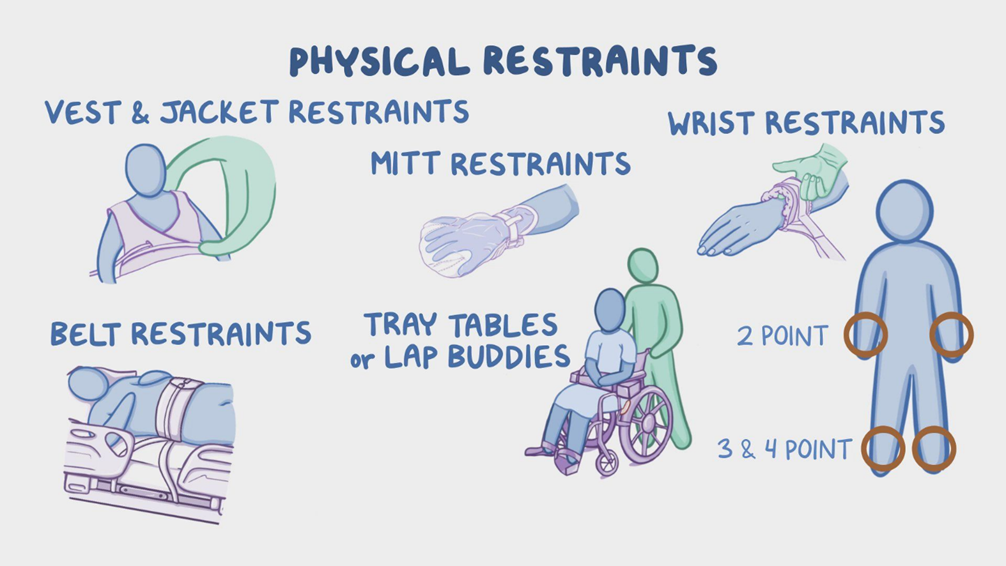
Keeping the restraints on for a minimum of 1 hour is not a standard practice. The duration of restraint use should be based on the child's behavior and the need for safety, rather than a fixed time period. Restraints should be used for the shortest duration necessary to ensure safety and should be removed as soon as the child is no longer a threat to themselves or others.
Choice B Reason:
Monitoring the child's vital signs every 15 minutes is crucial when a child is in physical restraints. This frequent monitoring helps ensure the child's physical well-being and allows for the early detection of any adverse effects related to the use of restraints. It is important to assess the child's respiratory and cardiovascular status, as well as their overall comfort and safety.
Choice C Reason:
Asking the provider to renew the prescription for the restraints every 24 hours is important, but it is not the most immediate action required. Restraint orders should be reviewed regularly to ensure they are still necessary, but the priority is to monitor the child's condition closely while they are restrained.
Choice D Reason:
Arranging an in-person evaluation by the child's provider within 2 hours of initiating restraints is a good practice to ensure the appropriateness of the restraint use and to reassess the child's condition. However, the immediate priority is to monitor the child's vital signs closely to ensure their safety while restrained.
Correct Answer is B
Explanation
Choice A reason:
The statement "Disulfiram" is not appropriate for managing acute alcohol withdrawal. Disulfiram is used as a deterrent for alcohol consumption by causing unpleasant effects when alcohol is ingested. It is not effective in treating the symptoms of acute withdrawal.
Choice B reason:
The statement "Chlordiazepoxide" is the correct response. Chlordiazepoxide is a benzodiazepine commonly used to manage acute alcohol withdrawal symptoms. It helps reduce the risk of seizures and provides sedation to alleviate withdrawal symptoms.
Choice C reason:
The statement "Bupropion" is not suitable for treating acute alcohol withdrawal. Bupropion is an antidepressant and smoking cessation aid. It does not address the symptoms of alcohol withdrawal and is not used in this context.
Choice D reason:
The statement "Buprenorphine" is not appropriate for managing acute alcohol withdrawal. Buprenorphine is used to treat opioid dependence and pain management. It does not address the symptoms of alcohol withdrawal.
Whether you are a student looking to ace your exams or a practicing nurse seeking to enhance your expertise , our nursing education contents will empower you with the confidence and competence to make a difference in the lives of patients and become a respected leader in the healthcare field.
Visit Naxlex, invest in your future and unlock endless possibilities with our unparalleled nursing education contents today