
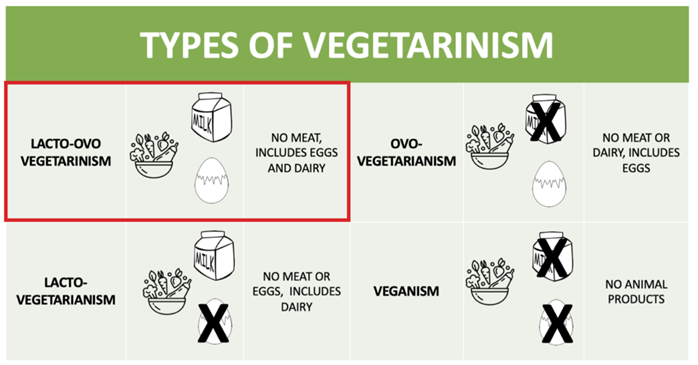
A nurse is selecting food items for a client who follows a lacto-vegetarian diet. Which of the following foods should the nurse include in the meal?
Hamburger
Cheese
Eggs
Shrimp
The Correct Answer is B
Choice A reason: Hamburger is not a suitable food item for a lacto-vegetarian diet because it is made from ground beef, which is an animal product. A lacto-vegetarian diet excludes meat, poultry, fish, and eggs, but allows dairy products.
Choice B reason: Cheese is a suitable food item for a lacto-vegetarian diet because it is a dairy product, which is allowed in this type of diet. Cheese provides protein, calcium, and vitamin B12 for lacto-vegetarians.
Choice C reason: Eggs are not a suitable food item for a lacto-vegetarian diet because they are an animal product. Eggs are excluded from a lacto-vegetarian diet, but they are allowed in an ovo-lacto vegetarian diet, which also includes dairy products.
Choice D reason: Shrimp is not a suitable food item for a lacto-vegetarian diet because it is a seafood product, which is an animal product. Seafood is excluded from a lacto-vegetarian diet, but it is allowed in a pescatarian diet, which also includes dairy products and eggs.
Nursing Test Bank
Naxlex Comprehensive Predictor Exams
Related Questions
Correct Answer is A
Explanation
Choice A reason: Tilt your head forward while you eat is a correct instruction for dysphagia. This position can help prevent choking by closing the airway and directing food and fluids to the back of the mouth and throat.
Choice B reason: Obtain your vitamins in liquid form is not a correct instruction for dysphagia. Liquid vitamins can be too thin and watery for people with dysphagia, as they can easily enter the airway and cause aspiration. Vitamins should be taken in pill or chewable form, or crushed and mixed with thickened liquids or pureed foods.
Choice C reason: Cool foods down to room temperature before consuming is not a correct instruction for dysphagia. Food temperature does not affect the risk of choking for people with dysphagia, as long as the food is not too hot or too cold. Food texture and consistency are more important factors for safe swallowing.
Choice D reason: Drink water with each bite of food is not a correct instruction for dysphagia. Water can also be too thin and watery for people with dysphagia, as it can also enter the airway and cause aspiration. Water should be thickened to a nectar-like, honey-like, or pudding-like consistency, depending on the individual's needs and preferences.
Correct Answer is A
Explanation
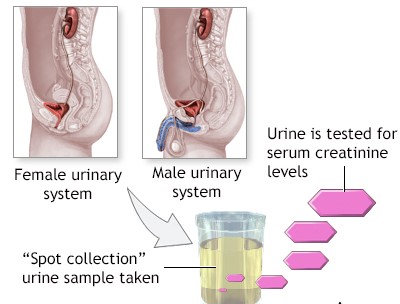
Choice A reason: Serum creatinine 3.5 mg/dL is high and indicates the need for further assessment. Creatinine is a waste product of muscle metabolism that is filtered by the kidneys. High creatinine levels can indicate kidney damage or impaired renal function.
Choice B reason: Hematocrit 45% is within the normal range (37-47% for women, 40-50% for men), and it does not indicate the need for further assessment. Hematocrit is the percentage of red blood cells in the blood. Low hematocrit levels can indicate anemia, bleeding, or hemolysis.
Choice C reason: Blood urea nitrogen 18 mg/dL is within the normal range (7-20), and it does not indicate the need for further assessment. Blood urea nitrogen is a waste product of protein metabolism that is filtered by the kidneys. High blood urea nitrogen levels can indicate dehydration, kidney damage, or high protein intake.
Choice D reason: Sodium 140 mEq/L is within the normal range (135-145), and it does not indicate the need for further assessment. Sodium is an electrolyte that helps maintain fluid balance, blood pressure, and nerve impulses. Low or high sodium levels can cause confusion, seizures, or coma.
Whether you are a student looking to ace your exams or a practicing nurse seeking to enhance your expertise , our nursing education contents will empower you with the confidence and competence to make a difference in the lives of patients and become a respected leader in the healthcare field.
Visit Naxlex, invest in your future and unlock endless possibilities with our unparalleled nursing education contents today