
A nurse is providing discharge teaching to a client who is starting to take carbidopa/levodopa to treat Parkinson’s disease. Which of the following instructions should the nurse include in the teaching?
This medication can cause your urine to turn a dark color.
Expect immediate relief after taking this medication.
Take the medication with a high-protein food.
Skip a dose of the medication if you experience dizziness.
The Correct Answer is A
Choice A Reason:
Carbidopa/levodopa can cause the urine to turn a dark color, such as red, brown, or black. This is a harmless side effect but can be alarming to patients if they are not forewarned. Informing patients about this potential change helps to prevent unnecessary concern.
Choice B Reason:
Expecting immediate relief after taking carbidopa/levodopa is not accurate. While some patients may experience symptom relief relatively quickly, it often takes several weeks for the full therapeutic effects to be realized. Patients should be advised to continue taking the medication as prescribed and to communicate with their healthcare provider about their progress.
Choice C Reason:
Taking carbidopa/levodopa with high-protein food is not recommended. High-protein foods can interfere with the absorption of the medication, reducing its effectiveness. It is generally advised to take the medication on an empty stomach or with a low-protein snack.
Choice D Reason:
Skipping a dose of the medication if experiencing dizziness is not advisable. Dizziness can be a side effect of carbidopa/levodopa, but it should be managed by adjusting the dose or timing of the medication rather than skipping doses. Patients should discuss any side effects with their healthcare provider to find the best management strategy.
Nursing Test Bank
Naxlex Comprehensive Predictor Exams
Related Questions
Correct Answer is D
Explanation
Choice A Reason
Increased erythrocyte sedimentation rate (ESR) is a marker of inflammation and is commonly elevated in conditions like rheumatoid arthritis. However, it is not a direct adverse effect of NSAID therapy. NSAIDs are more likely to cause gastrointestinal issues, such as bleeding, which would be detected by a fecal occult blood test.
Choice B Reason
Elevated creatinine clearance is not typically associated with NSAID use. In fact, NSAIDs can potentially reduce kidney function, leading to decreased creatinine clearance. Therefore, this option is incorrect.
Choice C Reason
Increased serum potassium levels can occur with NSAID use, especially in patients with compromised kidney function. However, this is less common compared to gastrointestinal bleeding, which is a more direct and frequent adverse effect of NSAID therapy.
Choice D Reason
Positive fecal occult blood test is the correct answer. NSAIDs can cause gastrointestinal bleeding, which can be detected through a fecal occult blood test. This is a well-documented adverse effect of NSAID therapy and is a significant concern for patients on long-term NSAID treatment.
Correct Answer is A
Explanation
Choice A Reason:
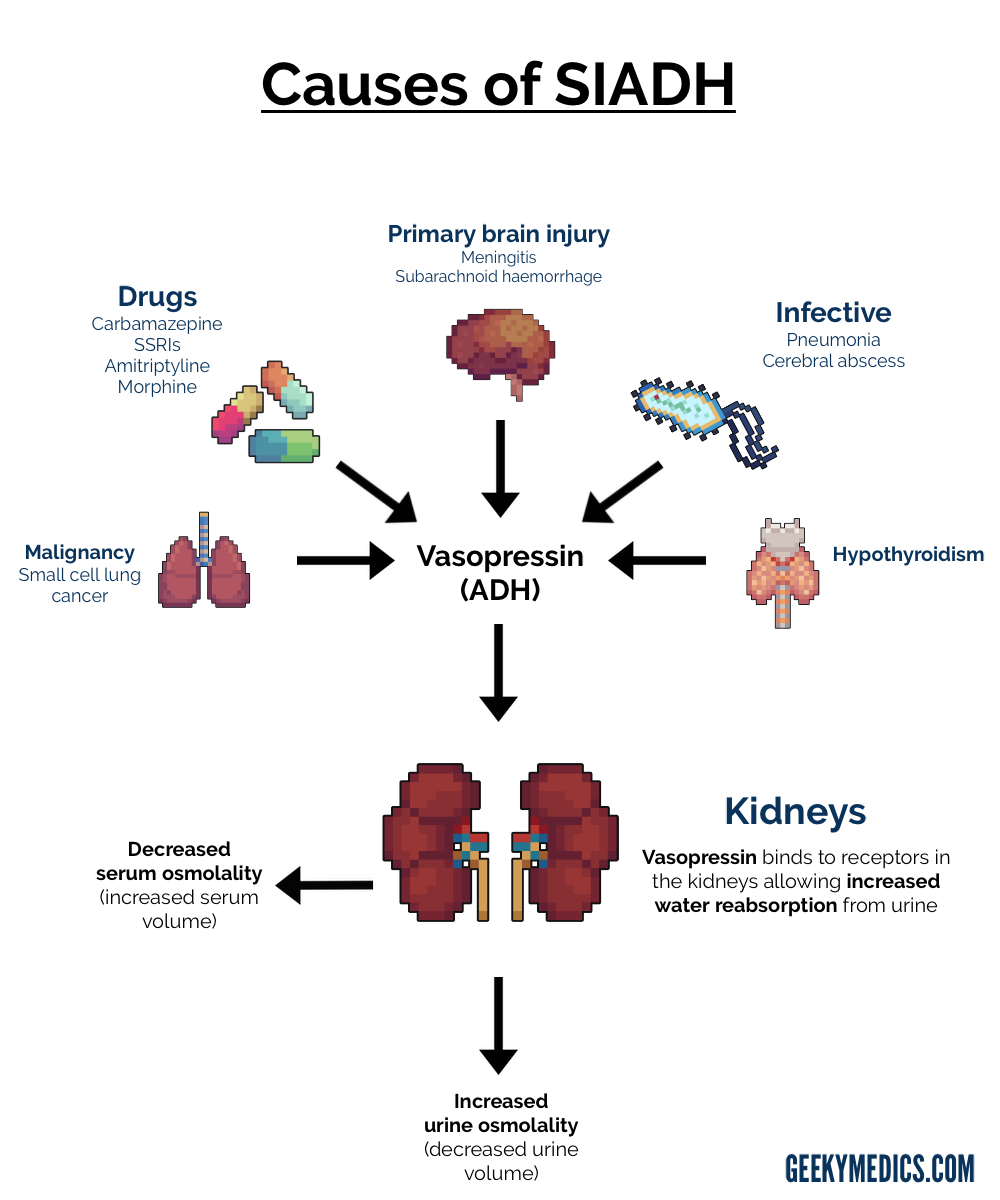
A urine specific gravity of 1.02 falls within the normal range (1.005 to 1.03) and indicates that the kidneys are excreting water appropriately. In SIADH, urine is typically concentrated due to excessive antidiuretic hormone (ADH) secretion. A normal urine specific gravity suggests that the ADH levels are normalizing and the condition is resolving.
Choice B Reason:
A sodium level of 119 mEq/L is significantly below the normal range (136 to 145 mEq/L) and indicates persistent hyponatremia. This finding suggests that the SIADH is not resolving, as effective treatment should lead to an increase in serum sodium levels.
Choice C Reason:
A BUN level of 8 mg/dL is slightly below the normal range (10 to 20 mg/dL) but is not a primary indicator of SIADH resolution. BUN levels can be influenced by various factors, including hydration status and renal function.
Choice D Reason:
A calcium level of 8.7 mg/dL is slightly below the normal range (9 to 10.5 mg/dL) but does not directly indicate the resolution of SIADH. Calcium levels are not typically used to monitor the effectiveness of SIADH treatment.
Whether you are a student looking to ace your exams or a practicing nurse seeking to enhance your expertise , our nursing education contents will empower you with the confidence and competence to make a difference in the lives of patients and become a respected leader in the healthcare field.
Visit Naxlex, invest in your future and unlock endless possibilities with our unparalleled nursing education contents today