
A nurse is planning care for a child who has varicella. Which of the following interventions should the nurse plan to include?
Provide the child with a warm blanket.
Assess the oral cavity for Koplik spots.
Administer aspirin for fever.
Initiate airborne precautions.
The Correct Answer is D
A. Providing a warm blanket can help alleviate discomfort associated with fever and chills, which are common symptoms of varicella.
B. Koplik spots are seen in measles, not varicella.
C. Aspirin administration is contraindicated in varicella due to the risk of Reye's syndrome. Acetaminophen or ibuprofen may be used for fever.
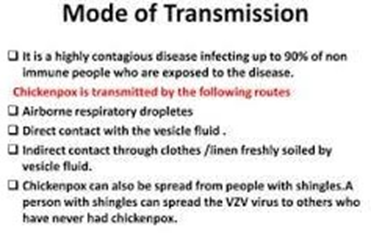
D. Varicella is spread through respiratory droplets, so standard precautions are typically sufficient. Airborne precautions are necessary to prevent transmission.
Nursing Test Bank
Naxlex Comprehensive Predictor Exams
Related Questions
Correct Answer is B
Explanation
A. Setting the water heater to 60° C (140° F) increases the risk of scald burns for toddlers due to hot water. This is not a recommended safety measure.
B. Keeping electrical wires hidden from view helps prevent electrical burns, which is a significant risk for toddlers who may touch or play with exposed wires.
C. Encouraging outdoor activities between 1100 and 1300 may expose toddlers to the sun during peak hours, increasing the risk of sunburns, but it does not directly address burn prevention.
D. Turning pot handles toward the front of the stove helps prevent toddlers from reaching up and pulling hot pots down, reducing the risk of burns. While a good safety measure, it is not as directly related to burn prevention as hiding electrical wires.
Correct Answer is ["C","D","E"]
Explanation
A. Inspecting the epiglottis is contraindicated in suspected cases of epiglottitis as it may trigger laryngospasm and compromise the airway.
B. Obtaining a throat culture may be indicated to confirm the presence of Haemophilus influenzae type B but is not an immediate priority in the management of epiglottitis.
C. Monitoring oxygen saturation is crucial as respiratory distress and hypoxia are common complications of epiglottitis.
D. Beginning droplet precautions is important to prevent the spread of the infectious agent to others.
E. Initiating IV access is necessary for administering fluids and medications, as well as for potential airway management in severe cases of epiglottitis.
Whether you are a student looking to ace your exams or a practicing nurse seeking to enhance your expertise , our nursing education contents will empower you with the confidence and competence to make a difference in the lives of patients and become a respected leader in the healthcare field.
Visit Naxlex, invest in your future and unlock endless possibilities with our unparalleled nursing education contents today