
A nurse is caring for a client who has a chest tube. The client asks why the fluid in the water-seal chamber rises and falls.
Which of the following statements should the nurse make?
"This indicates a possible air leak.".
"This means your lung is fully re-expanded.".
"Your breathing pattern causes this.".
"Suction pressure that is too high causes this.".
The Correct Answer is C
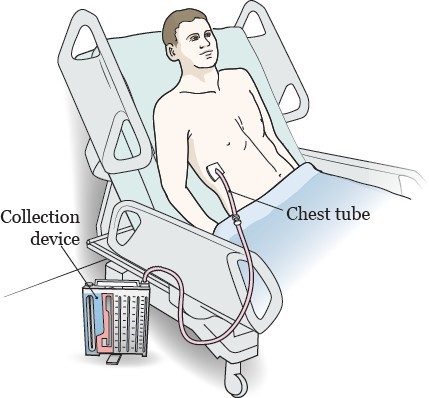
The fluctuation of fluid in the water-seal chamber of a chest tube is known as tidaling and is caused by the changes in pressure within the chest during respiration.
Choice A is not correct because tidaling does not indicate an air leak.
Choice B is not correct because tidaling does not necessarily mean that the lung is fully re-expanded.
Choice D is not correct because suction pressure does not cause tidaling.
Nursing Test Bank
Naxlex Comprehensive Predictor Exams
Related Questions
Correct Answer is D
Explanation
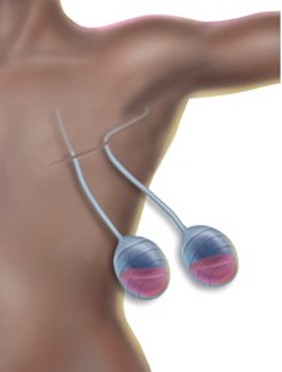
“I should expect less than 25 mL of secretions per day in the drainage devices.” After a mastectomy with breast reconstruction using a tissue expander, you may go home with drains in your chest to remove extra fluid.
Choice A is wrong because performing strength-building arm exercises using a 15-pound weight is not recommended.
Choice B is wrong because waiting 2 months before additional saline can be added to the breast expander is not accurate.
Choice C is wrong because keeping the left arm flexed at the elbow as much as possible is not recommended.
Correct Answer is A
Explanation
Thrombocytopenia, or low platelet count, is a contraindication to receiving heparin.
Rheumatoid arthritis is not a contraindication to receiving heparin.
Thalassemia is not a contraindication to receiving heparin.
COPD is not a contraindication to receiving heparin.
Whether you are a student looking to ace your exams or a practicing nurse seeking to enhance your expertise , our nursing education contents will empower you with the confidence and competence to make a difference in the lives of patients and become a respected leader in the healthcare field.
Visit Naxlex, invest in your future and unlock endless possibilities with our unparalleled nursing education contents today