
A nurse is caring for a client who acquired hepatitis A from consuming contaminated food. The client’s mouth is an example of which of the following links in the chain of infection?
Portal of entry
Infectious agent
Susceptible host
Reservoir
The Correct Answer is A
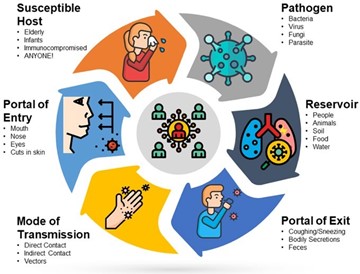
The chain of infection describes how an infection spreads based on six links of transmission: Infectious Agent, Reservoirs, Portal of Exit, Modes of Transmission, Portal of Entry, and Susceptible Host1. In this case, the client’s mouth is an example of a portal of entry, which is the route by which an infectious agent enters a new host1.
Nursing Test Bank
Naxlex Comprehensive Predictor Exams
Related Questions
Correct Answer is B
Explanation
The correct answer is b.
Choice A: SpO2 95%
The normal range for SpO2, or peripheral capillary oxygen saturation, is typically between 95% and 100%. While a SpO2 of 95% is within the normal range, it doesn't necessarily indicate an understanding of vital signs as it's on the lower end of the normal range.
Choice B: Right radial pulse regular 68/min
The normal resting heart rate for adults ranges from 60 to 100 beats per minute. Therefore, a right radial pulse of 68 beats per minute falls within the normal range and indicates an understanding of vital signs.
Choice C: Temp 36°C (96.8°F)
The normal body temperature for a healthy adult can range from 97.8°F (36.5°C) to 99.1°F (37.3°C). Therefore, a body temperature of 36°C (96.8°F) is slightly below the normal range.
Choice D: BP 148/72 mm Hg
The normal range for blood pressure in adults is between 90/60 mmHg and 120/80 mmHg. A blood pressure reading of 148/72 mm Hg is above the normal range for systolic pressure (the top number), indicating high blood pressure (hypertension).
Correct Answer is A
Explanation
Pain can cause an increase in sympathetic nervous system activity, leading to vasoconstriction and increased heart rate, which can result in hypertension. Pain may also increase the release of stress hormones, such as cortisol and epinephrine, which can further contribute to increased blood pressure.
Bradycardia (slow heart rate) decreased respiratory rate, and hypoglycemia are not typical findings associated with acute pain.
Whether you are a student looking to ace your exams or a practicing nurse seeking to enhance your expertise , our nursing education contents will empower you with the confidence and competence to make a difference in the lives of patients and become a respected leader in the healthcare field.
Visit Naxlex, invest in your future and unlock endless possibilities with our unparalleled nursing education contents today