
A nurse in a prenatal clinic is determining a client's estimated date of delivery using Naegele's rule. The first day of her last menstrual period was May 8. Which of the following dates should the nurse tell the client is her estimated date of delivery?
April 27.
April 11.
February 15
February 1
The Correct Answer is C
The estimated date of delivery (EDD) using Naegele's rule is _.
Step 1: Add 7 days to the first day of the last menstrual period. May 8 + 7 days = May 15
Step 2: Count 3 months back. May - 3 months = February
Step 3: Adjust the year if necessary. The year remains the same.
The estimated date of delivery is February 15 of the following year.
Nursing Test Bank
Naxlex Comprehensive Predictor Exams
Related Questions
Correct Answer is B
Explanation
Choice B:
Implantation typically occurs 6 to 12 days after ovulation, not 2 to 3 weeks. This is a crucial distinction because it aligns with the developmental timeline of the early embryo and the physiological changes in the endometrium that prepare for implantation.
The timing of implantation is essential for establishing a viable pregnancy. If implantation occurs too early or too late, it can lead to complications such as early pregnancy loss or ectopic pregnancy.
Understanding the correct timing of implantation is vital for healthcare professionals to provide accurate information and guidance to clients regarding conception and early pregnancy.
Choice A:
Sperm can indeed remain viable in the woman's reproductive tract for up to 5 days. This means that intercourse that occurs several days before ovulation can still lead to conception.
The lifespan of sperm is important for understanding fertility and timing intercourse for those trying to conceive.
Choice C:
Fertilization does typically occur in the outer third of the fallopian tube, also known as the ampulla. This is where the sperm meets the egg, and fertilization takes place.
The location of fertilization is significant because it ensures that the fertilized egg, or zygote, has time to travel down the fallopian tube and implant in the uterus.
Choice D:
Bleeding can sometimes accompany implantation, known as implantation bleeding. This bleeding is usually light and occurs around the time of expected menstruation.
It is important to be aware of implantation bleeding as it can sometimes be mistaken for a menstrual period.
Correct Answer is A
Explanation
Choice A rationale:
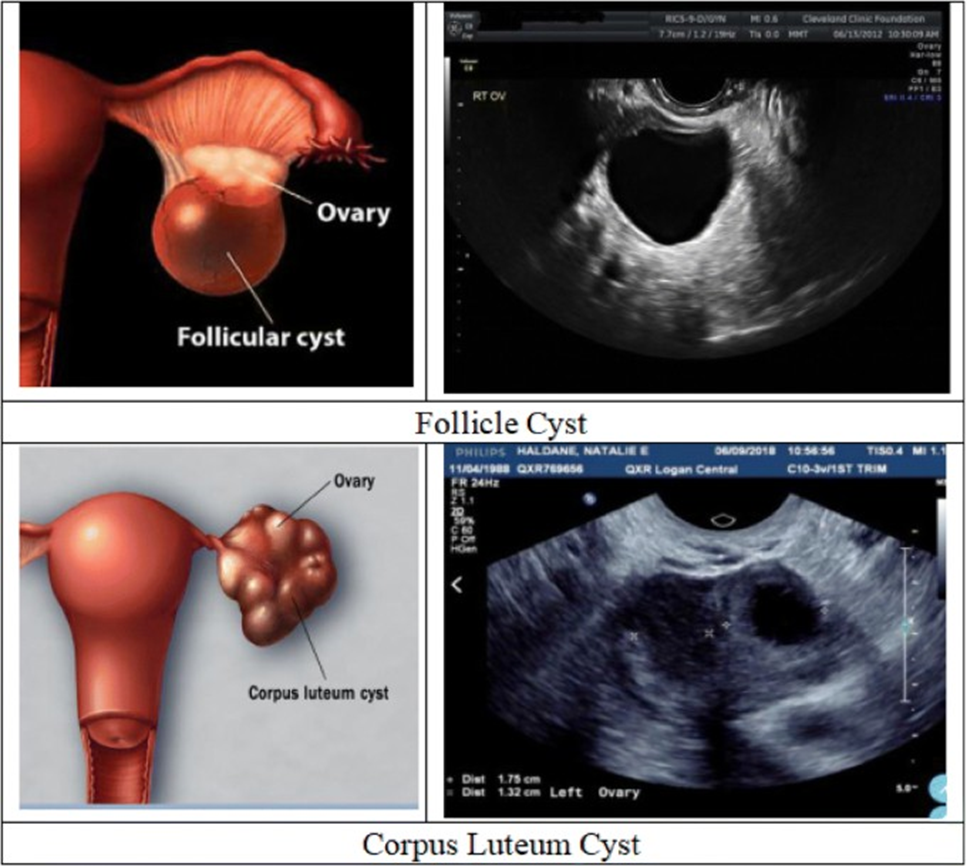
Ovarian cysts are fluid-filled sacs that form on or within an ovary. They are a common condition, affecting up to 1 in 5 women at some point in their lives. While most ovarian cysts are benign (non-cancerous), they can sometimes cause symptoms, including pelvic pain.
Ultrasound is a common imaging test that uses sound waves to create pictures of internal organs. It can be used to detect ovarian cysts, which often appear as fluid-filled sacs on the ovary.
The presence of an ovarian cyst on ultrasound, combined with the patient's symptoms of lower abdominal pelvic pain, suggests that the patient is at risk of developing complications from the cyst. These complications can include: Rupture: A ruptured ovarian cyst can cause sudden, severe pain and bleeding.
Torsion: This is when a cyst twists on its stalk, cutting off its blood supply. Torsion can also cause severe pain and may require emergency surgery.
Choice B rationale:
Appendicitis is an inflammation of the appendix, a small, finger-shaped organ located in the lower right abdomen. It is a common cause of abdominal pain, especially in young adults.
However, the patient in this scenario is experiencing pain in the lower abdominal pelvic region, not specifically in the lower right quadrant. This makes appendicitis less likely.
Additionally, the patient does not have any other symptoms that are typically associated with appendicitis, such as fever, nausea, or vomiting.
Choice C rationale:
Endometriosis is a condition in which tissue that normally lines the uterus grows outside of the uterus. It can cause pain, especially during menstruation.
However, the patient in this scenario does not report cyclical pain, which is a hallmark symptom of endometriosis. Additionally, endometriosis is not typically associated with the presence of fluid-filled sacs on the ovaries.
Choice D rationale:
Pelvic inflammatory disease (PID) is an infection of the upper genital tract, including the uterus, fallopian tubes, and ovaries. It is often caused by sexually transmitted infections (STIs).
PID can cause pelvic pain, but it is also typically associated with other symptoms, such as fever, vaginal discharge, and irregular bleeding.
The patient in this scenario does not have any of these other symptoms, and her white blood cell count is not elevated, which makes PID less likely.
Whether you are a student looking to ace your exams or a practicing nurse seeking to enhance your expertise , our nursing education contents will empower you with the confidence and competence to make a difference in the lives of patients and become a respected leader in the healthcare field.
Visit Naxlex, invest in your future and unlock endless possibilities with our unparalleled nursing education contents today