
Which of these clients is at greatest risk for umbilical cord prolapse?
A client who is pregnant with twins
A client who has gestational hypertension
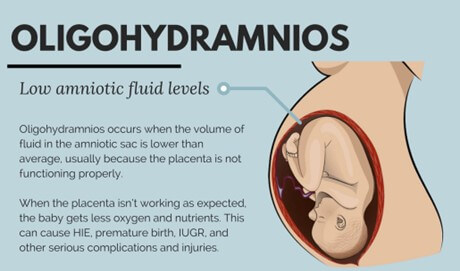
A client who has oligohydramnios
A client who has placenta previa.
The Correct Answer is C
The correct answer is choice C. A client who has oligohydramnios.
Oligohydramnios is a condition where there is too little amniotic fluid around the fetus. This can cause the umbilical cord to slip down into the cervix or vagina before the baby, resulting in cord prolapse.
Cord prolapse can cut off the blood and oxygen supply to the baby and cause fetal distress or death.
Choice A is wrong because a client who is pregnant with twins is not at greater risk for cord prolapse unless there is also malpresentation of the fetuses, such as breech or transverse lie.
Choice B is wrong because a client who has gestational hypertension is not at greater risk for cord prolapse unless there is also polyhydramnios, which is excessive amniotic fluid around the fetus.
Choice D is wrong because a client who has placenta previa is not at greater risk for cord prolapse unless there is also artificial rupture of membranes by doctors.
Nursing Test Bank
Naxlex Comprehensive Predictor Exams
Related Questions
Correct Answer is D
Explanation
The correct answer is choice D. A patient who is 34 weeks pregnant with a breech presentation and ruptured membranes.This is because breech presentation and ruptured membranes are both risk factors for umbilical cord prolapse, which is where the umbilical cord descends through the cervix and is alongside or below the presenting part of the fetus.This can cause fetal hypoxia and distress.
Choice A is wrong because a cephalic presentation and intact membranes are not risk factors for umbilical cord prolapse.
Choice B is wrong because although twins and ruptured membranes are risk factors for umbilical cord prolapse, the risk is lower than in choice D. Choice C is wrong because although a transverse lie is a risk factor for umbilical cord prolapse, the risk is lower than in choice D if the membranes are intact.
Correct Answer is A
Explanation
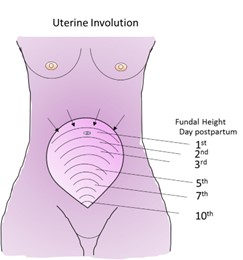
The correct answer is choice A. Normal involution.
This means that the uterus is returning to its pre-pregnancy size and position after delivery.
The fundus is the upper part of the uterus and it should be firm, midline, and gradually descend into the pelvis.A fundus that is 2 cm below the umbilicus at 4 hours postpartum is within the normal range.
Choice B. Subinvolution is wrong because it refers to a delayed or incomplete involution of the uterus.
This can result in prolonged bleeding, infection, or retained placental fragments.A fundus that is above the umbilicus, boggy, or displaced to one side may indicate subinvolution.
Choice C. Retained placenta is wrong because it means that some or all of the placenta remains in the uterus after delivery.
This can cause heavy bleeding, infection, or uterine atony.A fundus that is high, soft, or tender may indicate retained placenta.
Choice D. Endometritis is wrong because it means that the lining of the uterus is inflamed due to infection.
This can cause fever, foul-smelling lochia, pelvic pain, or uterine tenderness.A fundus that is enlarged, tender, or malodorous may indicate endometritis.
Normal ranges for fundal height after delivery are:
• Immediately after delivery:
Whether you are a student looking to ace your exams or a practicing nurse seeking to enhance your expertise , our nursing education contents will empower you with the confidence and competence to make a difference in the lives of patients and become a respected leader in the healthcare field.
Visit Naxlex, invest in your future and unlock endless possibilities with our unparalleled nursing education contents today