
Which nursing intervention is most important for preventing respiratory complications such as pneumonia and atelectasis in a postoperative client?
Control of anxiety and agitation
Adequate nutrition and fluids
Adequate pain control
Use of incentive spirometry
Early ambulation.
The Correct Answer is D
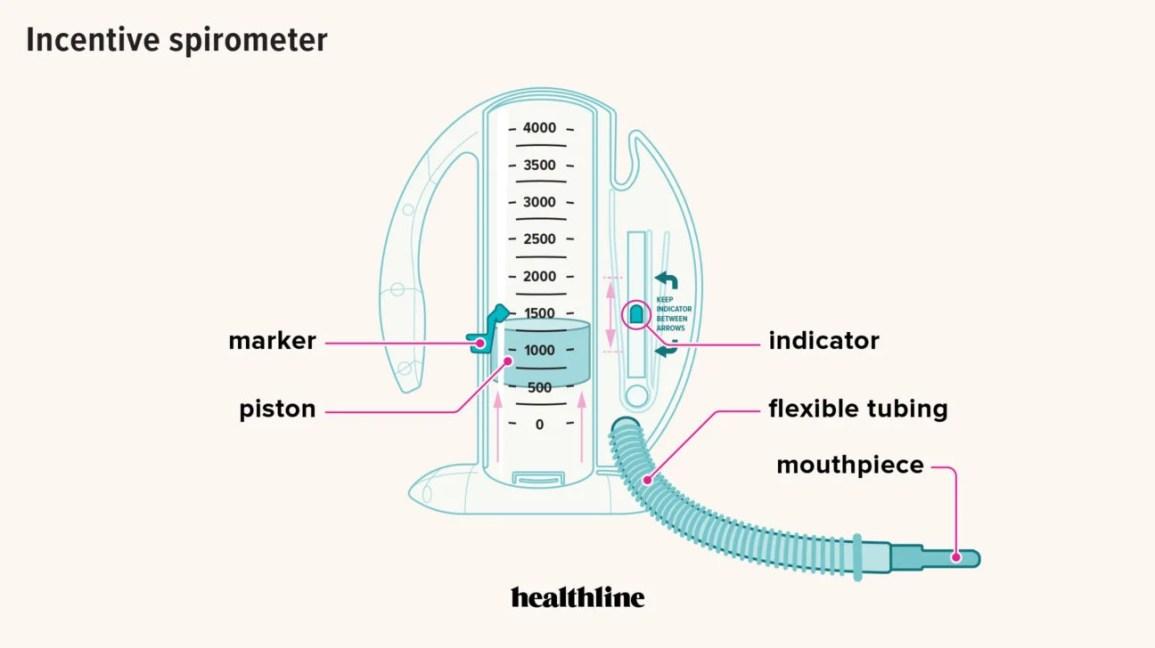
The correct answer is choice D) Use of incentive spirometry. Incentive spirometry is a device that helps patients take slow, deep breaths to expand their lungs and prevent respiratory complications such as pneumonia and atelectasis. Incentive spirometry also helps clear mucus and fluids from the lungs and improves ventilation.
Choice A is wrong because controlling anxiety and agitation may not directly prevent respiratory complications, although it may help patients breathe more comfortably.
Choice B is wrong because adequate nutrition and fluids are important for general health and recovery, but they do not specifically prevent respiratory complications.
Choice C is wrong because adequate pain control may help patients breathe more deeply and cough more effectively, but it is not enough to prevent respiratory complications by itself.
Choice E is wrong because early ambulation may improve blood circulation and reduce the risk of thromboembolism, but it does not directly prevent respiratory complications.
Nursing Test Bank
Naxlex Comprehensive Predictor Exams
Related Questions
Correct Answer is ["A","B","C","D"]
Explanation
The correct answer is choices A, B, C and D. The type of anesthesia used, the estimated blood loss during surgery, the vital signs and oxygen saturation, and the allergies and medications given are all important information to be included in the hand-off report from the anesthesia provider to the recovery area staff.
These information help to assess the patient’s condition, monitor for complications, and plan for appropriate interventions.
Choice E is wrong because the Apgar scores of the newborn are not relevant to the patient’s recovery from cesarean delivery.
The Apgar scores are used to evaluate the newborn’s physical condition at birth and are usually reported by the neonatal team.
The recovery area staff should focus on the patient’s postoperative care and pain management.
Correct Answer is D
Explanation
The correct answer is choiceD) Use of incentive spirometry.Incentive spirometry is a device that helps patients take slow, deep breaths to expand their lungs and prevent respiratory complications such as pneumonia and atelectasis.Incentive spirometry also helps clear mucus and fluids from the lungs and improves ventilation.
Choice A is wrong because controlling anxiety and agitation may not directly prevent respiratory complications, although it may help patients breathe more comfortably.
Choice B is wrong because adequate nutrition and fluids are important for general health and recovery, but they do not specifically prevent respiratory complications.
Choice C is wrong because adequate pain control may help patients breathe more deeply and cough more effectively, but it is not enough to prevent respiratory complications by itself.
Choice E is wrong because early ambulation may improve blood circulation and reduce the risk of thromboembolism, but it does not directly prevent respiratory complications.
Whether you are a student looking to ace your exams or a practicing nurse seeking to enhance your expertise , our nursing education contents will empower you with the confidence and competence to make a difference in the lives of patients and become a respected leader in the healthcare field.
Visit Naxlex, invest in your future and unlock endless possibilities with our unparalleled nursing education contents today