
The nurse caring for clients recognizes that there are several areas of potential liability in nursing practice. These include: (SELECT ALL THAT APPLY)
transferring a client to ICU without giving report.
completing the admission assessment.
documenting vital signs taken by another nurse.
calling the physician to request an order for pain medication for the client.
using an IV pump with a frayed cord.
Correct Answer : A,C,E
A. This action could pose a significant liability risk as it violates the standard of care, which includes providing thorough and accurate handoff communication to ensure continuity of care. Failing to provide a report before transferring a client to ICU could lead to miscommunication, errors in treatment, and compromised patient safety.
C. Documenting vital signs taken by another nurse is generally acceptable as long as the nurse ensures the accuracy of the information and documents according to institutional policies and standards. However, if the nurse knowingly documents false or inaccurate vital signs, it could pose a liability risk.
E. Using equipment with a frayed cord poses a significant liability risk as it could lead to electrical hazards, equipment malfunction, or patient injury. Nurses have a duty to ensure the safety and integrity of equipment used in patient care and should promptly report any defects or safety concerns to prevent harm to patients.
B. Completing the admission assessment is a standard nursing responsibility and is not inherently a liability risk. However, liability could arise if the assessment is incomplete, inaccurate, or not documented appropriately, leading to errors in care or failure to identify and address the client's needs
D. Calling the physician to request an order for pain medication is a routine nursing responsibility and is not inherently a liability risk. However, liability could arise if the nurse fails to communicate important information about the client's condition or medication history, resulting in inappropriate or unsafe prescribing practices.
Nursing Test Bank
Naxlex Comprehensive Predictor Exams
Related Questions
Correct Answer is D
Explanation
D. 0.9% sodium chloride (0.9% NaCl): This solution, also known as normal saline, is isotonic and contains the same concentration of sodium as extracellular fluid. It is the most appropriate choice for initial fluid resuscitation in hypovolemia due to severe bleeding because it rapidly expands intravascular volume, replaces sodium losses, and helps restore circulating blood volume.
A. This solution contains dextrose (glucose) and a small amount of sodium chloride. It provides some glucose for energy but has a lower sodium concentration compared to isotonic solutions like normal saline. While it may be used in certain situations, such as to provide maintenance fluids or correct mild dehydration, it is not the first choice for fluid resuscitation in hypovolemia due to severe bleeding because it does not adequately replace lost volume.
B. 3% sodium chloride (3% NaCl): This solution is hypertonic and has a high sodium concentration. It is not typically used for initial fluid resuscitation in hypovolemia due to severe bleeding. Hypertonic saline solutions like 3% NaCl are more commonly used in specific situations such as severe hyponatremia or cerebral edema.
C. 5% dextrose in water (D5W): This solution contains only dextrose and water and is isotonic until the dextrose is metabolized, after which it becomes hypotonic. D5W is not suitable for fluid resuscitation in hypovolemia due to severe bleeding because it does not provide adequate sodium or volume replacement.
Correct Answer is A
Explanation
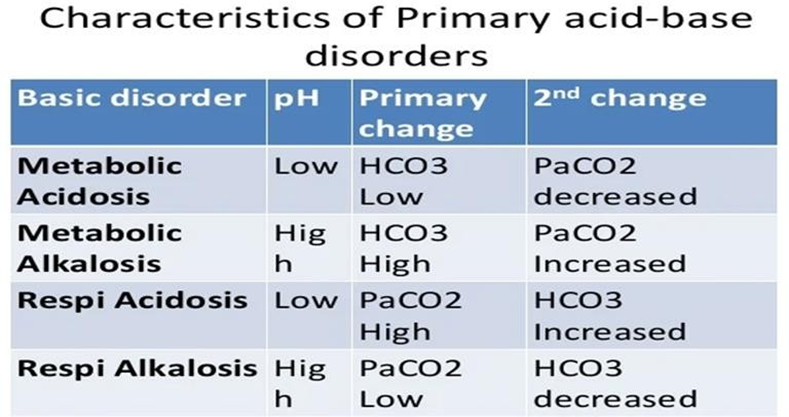
A. In respiratory alkalosis, the pH is elevated (alkalotic), the PaCO2 (partial pressure of carbon dioxide) is decreased (hypocapnia), and the HCO3 (bicarbonate) level may be within normal limits or slightly decreased due to compensatory mechanisms. In this option, the pH is elevated (7.54), the PaCO2 is decreased (25), and the HCO3 level is within normal limits (24). These findings support respiratory alkalosis.
B. pH 7.50, PaCO2 40, HCO3 28: In this option, the pH is elevated (7.50), the PaCO2 is within normal limits (40), and the HCO3 level is elevated (28). These findings are not consistent with respiratory alkalosis. Instead, they suggest metabolic alkalosis, where both the pH and bicarbonate levels are elevated.
C. pH 7.35, PaCO2 35, HCO3 22: In this option, the pH is within normal limits (7.35), the PaCO2 is within normal limits (35), and the HCO3 level is within normal limits (22). These findings are not consistent with respiratory alkalosis.
D. pH 7.32. PaCO2 48, HCO3 24: In respiratory alkalosis, the pH is elevated (alkalotic), the PaCO2 is decreased (hypocapnia), and the HCO3 level may be within normal limits or slightly decreased due to compensatory mechanisms. In this option, the pH is within normal limits (7.32), the PaCO2 is elevated (48), and the HCO3 level is within normal limits (24). These findings are not consistent with respiratory alkalosis.
Whether you are a student looking to ace your exams or a practicing nurse seeking to enhance your expertise , our nursing education contents will empower you with the confidence and competence to make a difference in the lives of patients and become a respected leader in the healthcare field.
Visit Naxlex, invest in your future and unlock endless possibilities with our unparalleled nursing education contents today