
A phlebotomist finds a patient who is unresponsive and not breathing. In which of the following positions should the phlebotomist place the patient before initiating CPR?
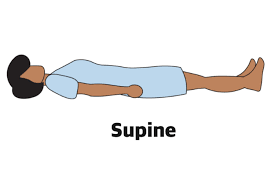
Supine
Semi-Fowler's
Prone
Side-lying
The Correct Answer is A
Choice A Reason:
The supine position, where the patient lies flat on their back with the face upward, is the correct position for initiating CPR. This position allows for proper chest compressions and airway management, which are critical components of CPR.
Choice B Reason:
The Semi-Fowler's position, where the patient is partially sitting up with the head of the bed raised to 30-45 degrees, is not suitable for CPR. This position would make it difficult to perform effective chest compressions.
Choice C Reason:
The prone position, where the patient lies flat on their stomach, is not appropriate for CPR. Chest compressions cannot be effectively delivered in this position, and it would also complicate airway management.
Choice D Reason:
The side-lying position is not appropriate for CPR. While this position can be used for an unconscious patient who is breathing normally to maintain an open airway and prevent aspiration, it is not suitable for CPR, which requires the patient to be on their back.
Nursing Test Bank
Naxlex Comprehensive Predictor Exams
Related Questions
Correct Answer is B
Explanation
Choice A Reason:
Covering the spill until maintenance arrives is not an appropriate response to a blood spill. This action does not neutralize any potential pathogens present in the blood, which could pose a risk of infection to others. Immediate cleanup is necessary to prevent the spread of infectious diseases, and simply covering the spill does not meet the Occupational Safety and Health Administration (OSHA) guidelines for bloodborne pathogens, which require the spill to be cleaned with an appropriate disinfectant.
Choice B Reason:
Pouring bleach on the spill and allowing it to soak for 60 seconds is the recommended action because bleach is a powerful disinfectant that can kill a wide range of pathogens, including those that might be present in venous blood. The Centers for Disease Control and Prevention (CDC) recommends a 1:10 dilution of household bleach for effectively disinfecting blood spills. After pouring the bleach, it is important to let it soak for an adequate amount of time, usually around 10 minutes, to ensure that all pathogens are killed.
Choice C Reason:
Evacuating the laboratory is not a necessary action for a blood spill unless the spill is extensive and poses additional risks that cannot be mitigated by standard cleanup procedures. In most cases, following the proper spill cleanup protocol, which includes wearing personal protective equipment (PPE) and using an EPA-registered disinfectant, is sufficient to handle the situation without needing to evacuate the area.
Choice D Reason:
Applying a liquid thickening agent on top of the spill is not a standard practice for blood spill cleanup. While a thickening agent might contain the spill, it does not disinfect the area. The priority in such situations is to disinfect and remove any potential infectious agents. Therefore, the use of a thickening agent would not be in compliance with the recommended procedures for blood spill cleanup by OSHA and the CDC.
Correct Answer is A
Explanation
Choice A Reason:
The patient's condition is a critical factor as it can influence the ease of blood collection and the choice of collection site. For example, a dehydrated patient may have less accessible veins. Patient age is also important; pediatric and geriatric patients may require different approaches due to vein size and fragility. The blood volume required for testing must be considered to ensure sufficient sample size without compromising patient safety, adhering to guidelines that limit blood collection to a certain percentage of the patient's total blood volume.
Choice B Reason:
While patient height and gender may influence the choice of blood collection site, they are not as critical as the factors listed in choice A. Patient medications are important to consider, as some medications may affect coagulation or the integrity of the sample.
Choice C Reason:
The ordering physician's preferences may be considered, but they are not a primary factor in the method of collection. The number of tests ordered and the diagnosis can influence the volume of blood needed but are secondary to the patient's condition and safety considerations.
Choice D Reason:
The time of day and the timing of the specimen collection can be important for certain tests that are time-sensitive or influenced by diurnal variations. The test status, whether routine or stat, may affect the urgency of collection but not necessarily the method of collection.
Whether you are a student looking to ace your exams or a practicing nurse seeking to enhance your expertise , our nursing education contents will empower you with the confidence and competence to make a difference in the lives of patients and become a respected leader in the healthcare field.
Visit Naxlex, invest in your future and unlock endless possibilities with our unparalleled nursing education contents today