
A nurse is checking the client's bowel sounds. At which time should the nurse auscultate the client's abdomen?
The Correct Answer is ["1"]
The nurse typically auscultates the abdomen for bowel sounds before meals or at least 1-2 hours after meals. This timing allows for the assessment of both the presence and character of bowel sounds. It is important to note that bowel sounds can vary depending on factors such as the client's activity level, diet, and any underlying gastrointestinal conditions. Therefore, a comprehensive assessment of bowel sounds should be conducted at different times to obtain an accurate representation of the client's bowel function.
Nursing Test Bank
Naxlex Comprehensive Predictor Exams
Related Questions
Correct Answer is A
Explanation
Docusate is a stool softener commonly used to relieve constipation. Opioid pain medications often cause constipation as a side effect by slowing down bowel movements. Docusate helps by increasing the amount of water absorbed by the stool, making it softer and easier to pass.
The other options mentioned are not the primary therapeutic effects of docusate: Relief from nausea: Docusate is not typically prescribed for relief from nausea. Antiemetic medications are used to alleviate nausea and vomiting.
Decreased drowsiness: Docusate does not directly affect drowsiness. Its main action is on the stool consistency, not on alertness or drowsiness.
Decreased cancer pain: Docusate is not prescribed for pain relief. Opioids are generally used to manage cancer pain in this scenario.
Correct Answer is D
Explanation
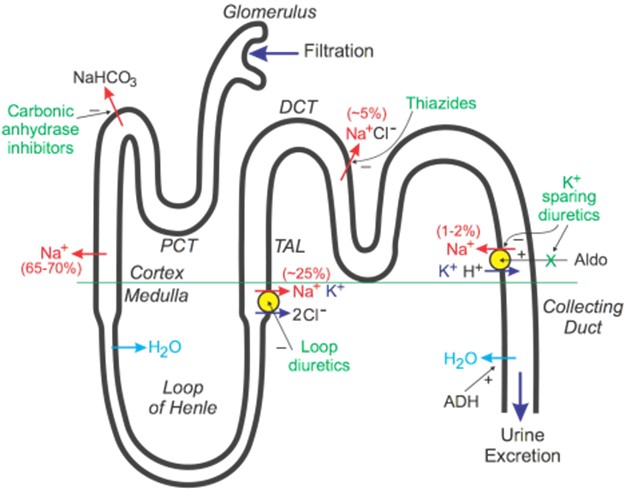
Furosemide is a loop diuretic that helps the body get rid of excess fluid by increasing urine output. However, it also promotes the loss of potassium in the urine, leading to a potential decrease in the body's potassium levels.
Whether you are a student looking to ace your exams or a practicing nurse seeking to enhance your expertise , our nursing education contents will empower you with the confidence and competence to make a difference in the lives of patients and become a respected leader in the healthcare field.
Visit Naxlex, invest in your future and unlock endless possibilities with our unparalleled nursing education contents today